Introduction of Safari Sharjah
Sharjah Safari Park is the UAE’s large-scale, landscape-style wildlife experience designed to simulate broad savanna habitats and allow animals to roam in more expansive, naturalistic zones. This guide is rewritten with natural language processing (NLP) awareness: headings as intent signals, short Descriptive paragraphs as canonical utterances, synonyms and semantic variants sprinkled to boost lexical breadth, and structured bits (tables, checklists, schema-ready FAQ) to encourage good indexing and reliable slot-filling for conversational assistants. It is written for first-timers, families, wildlife photographers, and planners who want explicit, actionable sequences: which ticket to choose, how to reach the park, three copy/paste itineraries, best vantage points for photos, accessibility notes, a comparison with Dubai alternatives, and a printable one-page plan for handing to a driver.
Key facts
- Location: Al Bardi / Al Dhaid area, Emirate of Sharjah. (Use maps for precise directions.)
- Opened: February 2022 (public opening after multi-year development).
- Park size: ~800 hectares (planned landscape-scale reserve).
- Animals: Large mammals (giraffes, rhinos, zebras, oryx), big cats, walk-through aviaries, reptile exhibits; species and exhibits are periodically updated — always check the official roster.
- Ticket packs: Bronze (walking), Silver (guided coach/safari), Gold (premium/private), plus private van/coach hires.
- Best months: November–March (milder temperatures and higher animal activity).
Why visit Sharjah Safari Park?
Sharjah Safari Park is intentionally different from a traditional urban zoo. The design philosophy is landscape-first: habitat expanses are prioritized so animals can express natural behaviours in broader enclosures. For photographers and visitors who want horizons, herd dynamics and sweeping savanna contexts, this park offers panoramic compositions and coach-accessible vantage points, For families, the mix of open drives and walk-through educational zones (African Bird Park, Reptile House, Kid’s Arena) provides variety and shaded interludes. In short: choose Sharjah Safari Park if your intent is big-animal landscapes, long-lens portraits, or a full-day educational experience.
Location, how to get there & practical tips
Where exactly is it?
Sharjah Safari Park sits inland near Al Bardi / Al Dhaid in the Emirate of Sharjah, north-east of central Dubai and east of Sharjah city. Always confirm the official address and plug it into your navigation app for exact routing.
By car
Driving is the simplest, most flexible option. The park has on-site parking close to the main entrance hubs. From central Dubai or Sharjah city, the typical travel time is ~40–60 minutes in normal traffic; allow extra time on weekends and public holidays.
Taxi / ride-hailing
Ride-hailing and local taxis will drop you at the entrance; keep the park phone number or the exact address handy to avoid drop-off confusion.
Public transport
Public transport options are limited; most visitors use private vehicles, taxis, or organized tours. If you’re dependent on public transit, check recent local schedules and tour operator offerings before travel.
Practical on-site tips
- Prebook tickets — peak days sell out for guided vehicles and premium slots.
- Arrive early for cooler Temperatures and more active animals.
- Pack sun protection, refillable water and a hat — many walkways are exposed.
- Accessibility: Main hubs and many walkways are accessible; confirm private-vehicle accessibility before booking.
Tickets & how to choose
Ticket comparison
| Ticket | What it includes | Typical price (example) | Best for |
| Bronze (Walking) | Walk-through exhibits (bird park, aviary, reptile house) | AED ~40 (example) | Families, budget visitors, short visits |
| Silver (Guided coach/safari) | Guided coach safari through the large zones | AED ~120 (example) | First-time visitors who want the core safari drive |
| Gold (Premium / Private) | Premium seats, private van options, and longer stops for photos | AED ~275 (example) | Photographers, small private groups wanting flexible stops |
| Private Van/Coach | Fully private booking, flexible stops, customized timing | Variable — book online | Events, professional photography, exclusive groups |
Data caveat: Prices and inclusions may change. Always confirm current rates and availability at the official booking portal.
How to pick the right ticket (quick decision rules)
- 2–3 hours available: A Bronze walking ticket is efficient for a short family outing.
- Core safari experience: Silver guided coach delivers the main drive and coverage.
- Photography/stops needed: Gold or private van — guides permit longer stops and more framing time.
- On a budget: Bronze + early arrival yields a condensed but rewarding visit.
3 ready-to-use itineraries
These are purpose-driven sequences (intent = family, explorer, photographer). Times are examples; adapt to the park’s official slot times.
Half-day Family (3–4 hours)
- 08:30 — Arrive, show e-ticket, coffee at the entrance hub.
- 09:00 — Bronze walking tour: African Bird Park & Baobab Avenue (kid-friendly).
- 10:00 — Reptile House & Kid’s Arena (indoor activities / shaded play).
- 11:00 — Lunch at Zanzibar Village; souvenir stop.
- 12:00 — Gift shop and exit.
Full-day Explorer (6–7 hours)
- 08:00 — Arrive early; pick up a map at the info desk.
- 08:30 — Silver guided coach/safari: primary loop covering savanna, predators and large-herd zones.
- 11:00 — Walk-through African Bird Park & scheduled feeding demo.
- 12:30 — Lunch at Zanzibar Village or shaded picnic area.
- 13:30 — Reptile House + Arabian Wildlife Centre exhibits.
- 15:30 — Guided photo loop at giraffe and rhino vantage points (ask staff for best stops).
- 16:30 — Relax at the shaded cafe, shop, and depart.
Photographer’s Plan (half or full day)
- Book a Gold/private van to secure flexible stops and extended framing windows.
- Early morning — golden hour wide-sky savanna shots and active animals.
- Mid-morning — aviaries and shaded vantage points for close-ups.
- Late afternoon — backlit portraits and silhouette opportunities.
Top zones & what to see
Savanna & Safari Drives
Wide plains with giraffes, oryx and grazing herds — best viewed from a coach or private van. Use long-lens coverage to isolate individuals and herd dynamics.
Big Cats & Predator Areas
Predator enclosures are designed with natural backdrops. Observe from vehicles or secure platforms for safety and better framing.
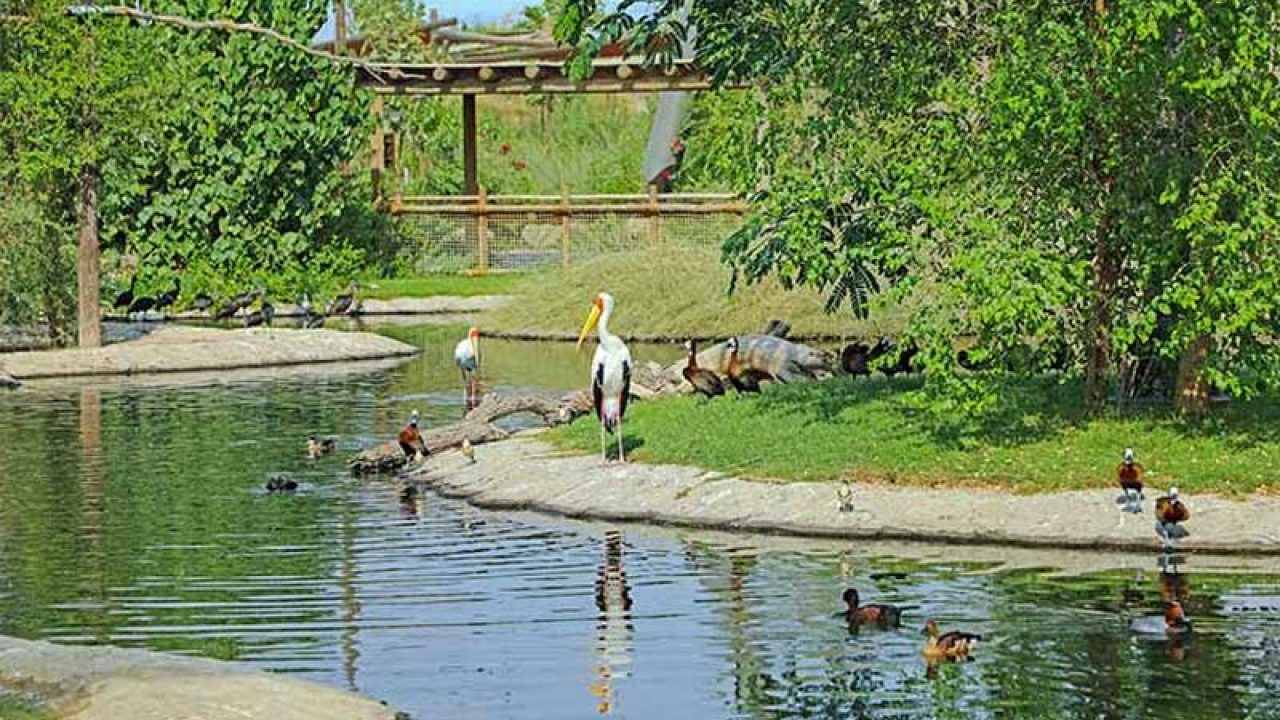
African Bird Park
Walk-through aviaries with scheduled feeds. Great for colourful plumage close-ups and freeze-frame flight shots.
Reptile House & Arabian Wildlife Centre
Indoor exhibits are ideal for hot midday hours, educational captions and macro photography.
Zanzibar Village
Main visitor hub hosting restaurants, cafes, shaded seating and souvenir shops. Facilities (restrooms, water stations) cluster here.
Photography & gear tips
- Lenses: 70–200mm or 100–400mm for mid-distance; 300mm+ for tight portraits from vehicle windows; 24–70mm for walkways and wide contexts.
- Avoid window glare: Brace lenses against the vehicle frame, use polarizer filters if allowed, or request a van stop.
- Golden hour: Early morning and late afternoon deliver warm, directional light and dramatic silhouettes.
- Ethics: Never feed, provoke or harass animals for photos. Follow the guide instructions and park rules.
- Practical kit: Lens cloths (dust), a small monopod for stability inside vans, spare batteries, high-capacity memory cards, and a sunshade for your camera.
Accessibility & family notes
- Wheelchairs & strollers: Main visitor hubs and many walkways are accessible, but boarding private vans may need pre-arranged assistance — confirm when booking.
- Kids: The Kids’ Arena, bird feedings and interactive exhibits are family-focused. Bring sunscreen, hats and snacks; verify age or height restrictions for hands-on encounters.
- Facilities: Restrooms, water refill points and shaded seating concentrate near Zanzibar Village — plan mid-day rests accordingly.
Visitor reviews — praise & common complaints
Praise: Visitors appreciate the park’s scale, immersive environments, good visibility of large mammals and family-oriented design. The open habitats produce more natural sightings and better photographic composition.
Common complaints: Seasonal crowding and wait times for guided tours. Typical remedies: prebook and visit weekday mornings; pick off-peak months for more serenity.
Sharjah Safari Park vs Dubai Safari Park
| Feature | Sharjah Safari Park | Dubai Safari Park |
| Scale & design | Landscape-scale safari reserve (~800 ha) — emphasis on open-range drives | Large zoological park with themed areas and multiple attractions |
| Best for | Safari-style drives, landscape & large-mammal photography | Variety of shows, family encounters, themed exhibits |
| Ticketing | Tiered packs (Bronze/Silver/Gold) + private vans | Attraction-specific tickets, multiple add-ons |
| Accessibility from Dubai | ~40–60 min drive, depending on traffic — more remote | Access depends on your Dubai location; sometimes closer |
Quick pick: Choose Sharjah for wide landscapes and herd photography; choose Dubai for varied shows and family entertainment with many zones.
Conservation, animal welfare & environment
Modern parks focus on enclosure design, veterinary care and education. Sharjah Safari Park was presented as a major regional Investment with conservation and education goals at its opening. If conservation credentials matter to you, look for published reports on breeding programmes, vet facilities, outreach initiatives and partnerships with conservation NGOs.
Survival tips & common visitor challenges
- Heat & sun: Protect against heatstroke — use shaded hubs and indoor exhibits at midday.
- Crowds: Prebook and avoid peak late-morning on weekends.
- Photos through glass: Choose Gold/private vans or ask for designated photo stops.
- Food & rules: Respect park policies on outside food and animal interactions.
Interesting facts & recent notes
- The park opened in 2022 after several years of planning and development and received regional press coverage at launch.
- The park periodically adds species during seasonal rotations and special events; check announcements for seasonal changes.
Quick planning checklist
| Item | Recommendation |
| Book tickets | Online at the official portal — Bronze/Silver/Gold/private. |
| Arrival time | Early morning for animal activity. |
| Transport | Car or taxi recommended. |
| Gear | Telephoto lens, sun protection, water, comfy shoes. |
| Food | On-site cafes (Zanzibar Village) or picnic (confirm park rules). |
Pros & Cons
Pros
- Large, natural-feeling exhibits for photography and animal welfare.
- Tiered ticketing suits different budgets and intents.
- Educational walk-throughs and indoor exhibits for shade and learning.
Cons
- More remote location — driving or tour needed.
- Seasonal crowding on peak days.
- Prices and inclusions can change — verify before booking.
FAQs
A: The park is in the Al Bardi / Al Dhaid area of Sharjah. Use official maps and ticket pages for exact directions.
A: Bronze (walking), Silver (coach/safari), Gold (premium/private), and private vans. Prices change — check the official booking portal for current rates.
A: Yes — there is a Kid’s Arena, bird park and indoor exhibits. Bring sun protection and check age/height limits for specific programmes.
A: Yes — private van and Gold tours are available; book in advance to secure flexible stops for photography.
A: Early morning or late afternoon, especially in cooler months (Nov-Mar). Weekdays are generally quieter than weekends.
Conclusion
Sharjah Safari Park represents a large regional investment in wildlife tourism and education. The park’s landscape-focused design aims to provide broader zones for animals and more natural observational opportunities for visitors — especially valuable for photographers, families and learners. To maximize your visit, pre-book the ticket tier that matches your group’s goals. Show up early for cooler temperatures and more animal activity. Bring sun Protection and a telephoto lens if you’re photographing. Use walk-through exhibits as shaded educational breaks during peak sun hours. For most visitors who want a balanced overview, Silver (the guided coach drive) offers the best value and coverage. If you require flexibility for photos or a private experience, choose Gold or a private van and confirm special requests when booking. Always verify prices, special events and any temporary closures on the official ticket portal before you travel.