Introduction
When people search for the warmest desert in the world, the answer depends on whether they mean air temperature or land-surface temperature. For surface heat, Iran’s Lut Desert, also known as Dasht-e Lut, is one of the strongest scientific answers. NASA satellite data and UNESCO recognition both show why this desert stands out as one of the hottest and most extraordinary landscapes on Earth.
What “Warmest Desert” Really Means
The phrase warmest desert in the world can mean different things depending on how heat is measured. That is where many people get confused. A desert can have the highest air temperature, but that does not automatically mean it has the hottest surface temperature. NASA makes this distinction clear: air temperature is measured above the ground, usually in the atmosphere around weather stations, while land-surface temperature measures how hot the ground itself becomes.
This is exactly why Death Valley keeps showing up in desert heat discussions. It is famous for extreme air-temperature records, and that reputation is well deserved. But satellite-based surface measurements tell a different story about the hottest ground heat on Earth. In other words, the place with the hottest air is not necessarily the same place with the hottest soil, sand, or rock.
For search intent, this distinction is crucial. Many readers are not just looking for a trivia answer. They want the correct answer for the specific type of heat being discussed. That is why Iran’s Lut Desert is such a powerful subject for a pillar article: it resolves the confusion, clarifies the science, and gives the reader a complete, trustworthy explanation.
So when someone asks about the warmest desert in the world, the best response is not a one-word answer. The best response explains the measurement, defines the terms, and then identifies the desert that most clearly fits the question. In that framework, the Lut Desert becomes one of the strongest candidates on Earth.
Why Iran’s Lut Desert Wins the Search Intent
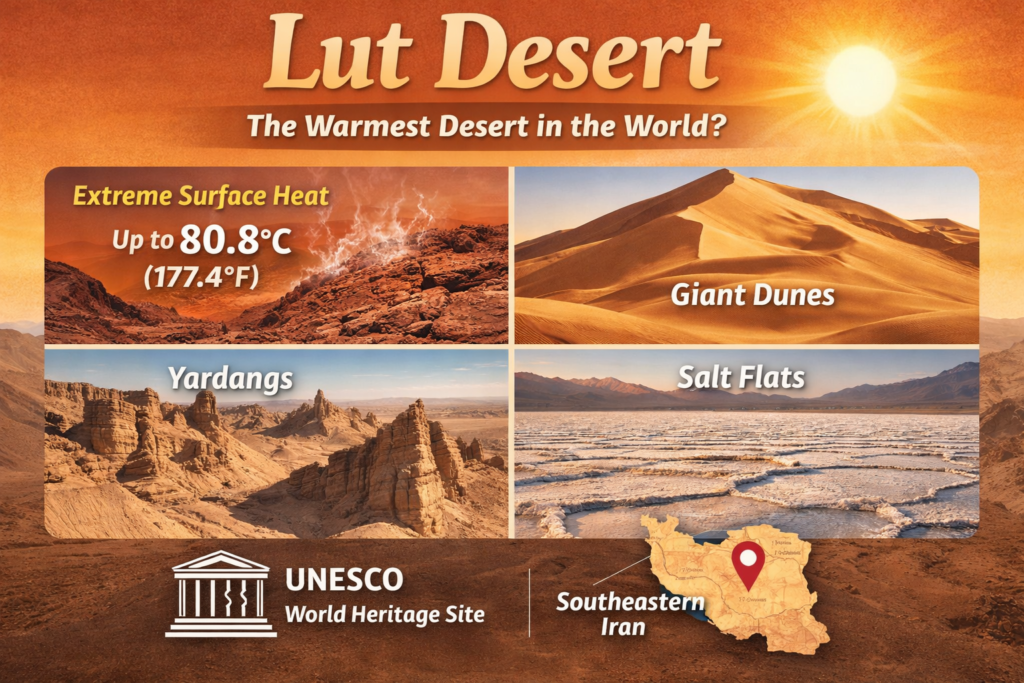
The strongest reason Lut wins this keyword is straightforward: it has a serious scientific foundation. NASA’s Earth Observatory has described Lut as one of the hottest surface locations on the planet, and the MODIS analysis found a top surface temperature of 80.8°C (177.4°F). NASA also explained that the desert’s sand can be darkened by volcanic lava, which increases heat absorption, while surrounding mountains reduce airflow and help trap heat in the basin.
UNESCO provides a second major reason. Lut is not only hot; it is visually and geologically remarkable. The site includes yardangs, dune fields, salt pans, rocky desert pavements, and the basaltic Gandom Beryan plateau. UNESCO says the yardang formations are among the best expressed in the world, and the sand seas contain some of the highest dunes documented anywhere on the planet.
Location and Geography of the Lut Desert
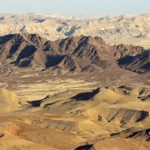
The Lut Desert is located in southeastern Iran. UNESCO describes it as an arid continental subtropical area with a strikingly diverse set of desert landforms. The property covers 2,278,015 hectares, with a large buffer zone around it, and lies in an interior basin surrounded by mountains. That basin setting places much of the region in a rain shadow, which helps create its hyper-arid character.
The name itself is meaningful. In Persian, “Lut” refers to bare land without water and without vegetation. That meaning fits the landscape perfectly. At first glance, the desert can seem empty, but that impression is misleading. Lut is actually full of physical character: towering dunes, dark rocky plains, salt crusts, eroded ridges, and broad open spaces that stretch to the horizon.
This geographic setting is one of the reasons Lut matters in a serious article. Readers usually want to know not just how hot a place is, but also where it is, what it looks like, and why its location matters. Lut answers all of those questions in a way that feels complete and memorable.
Basin Setting and Strong Winds
One of the reasons Lut is so extreme is its regional geography. UNESCO says a steep north-south pressure gradient forms in spring and summer, creating strong winds that sweep across the region between June and October. Those winds move sand at high speed and create large-scale erosion. Over time, this persistent wind action shapes the desert into dramatic and unusual forms.
This matters in two ways. First, it influences the appearance of the land. Second, it contributes to the environmental conditions that make the desert so harsh. In simple terms, the desert is not static. It is constantly being reshaped by wind, dryness, and solar exposure.
NASA highlights the same kind of interaction: dark surfaces, limited airflow, and extreme aridity combine to create one of the planet’s most intense surface heat environments. That is why Lut is more than a desert with a record number. It is a living system of heat, movement, erosion, and geological contrast.
Why Geography Matters for Search Readers
From a content strategy perspective, geography is essential because it grounds the article in a real place. Readers are not only searching for a temperature statistic. They also want a mental image of the region. By explaining that Lut is an interior basin in southeastern Iran, surrounded by mountains and shaped by powerful winds, the article becomes easier to understand and more satisfying to read.
This geographical framing also helps with semantic search. Terms like basin, rain shadow, interior plateau, wind erosion, arid Continental climate, and hyper-arid terrain all strengthen topical relevance. They help the article feel complete without sounding repetitive.
Climate and Weather Patterns
The climate of Lut is extreme because several heat-amplifying factors work together at once. NASA says the desert lies in terrain that restricts air movement, and parts of the surface contain dark volcanic material that absorbs heat efficiently. Darker ground reflects less sunlight and stores more energy, which makes the surface warmer faster and for longer periods.
UNESCO describes the area as hyper-arid, and that dryness matters a great deal. In dry environments, the land loses one of the main natural cooling mechanisms: evaporation. Without moisture, heat builds up more quickly on the ground and remains intense through much of the day.
These conditions create a desert environment that is not just hot in summer, but structurally designed by nature to retain heat. That is one reason why Lut’s surface temperatures stand out so dramatically in satellite studies.
Air Temperature vs Land-Surface Temperature
This is the key idea every reader should understand. Air temperature is what weather stations measure in the air the ground. Land-surface temperature is the heat of the sand, rock, or soil itself. NASA explains that these are different measurements, and they should not be treated as interchangeable.
This difference is the reason some famous deserts appear in the same conversation even though they are known for different kinds of heat. Death Valley may dominate air-temperature history, while Lut is more prominent in land-surface heat discussions. Both can be true, because the metric is different.
That distinction also makes the article more useful for readers. It prevents oversimplification and gives a clearer answer. When people ask about the warmest desert in the world, the most accurate reply depends on whether they mean atmospheric heat or ground heat. Lut is one of the best answers for the second category.
Why Lut Gets So Hot
There are three main reasons Lut becomes so intensely hot.
First, the surface contains dark volcanic material in some areas, which absorbs sunlight more effectively than lighter terrain. Second, the desert’s basin structure and surrounding mountain ranges limit ventilation, reducing the natural cooling effect of moving air. Third, the environment is extremely dry, so there is very little moisture to moderate the heat.
NASA describes this combination as part of what makes Lut such a striking heat environment. These are not isolated factors. They reinforce each other. Dark ground heats fast, dry air and soil do not cool easily, and restricted airflow allows heat to accumulate. Together, they produce one of the hottest surface landscapes on Earth.
That is why the warmest desert in the world query should not be answered casually with “Sahara” or “Death Valley.” Those places are famous, but they are famous for different reasons. Lut is the strongest answer when the discussion is about surface heat, scientific evidence, and desert geomorphology.
Landforms That Make Lut So Special
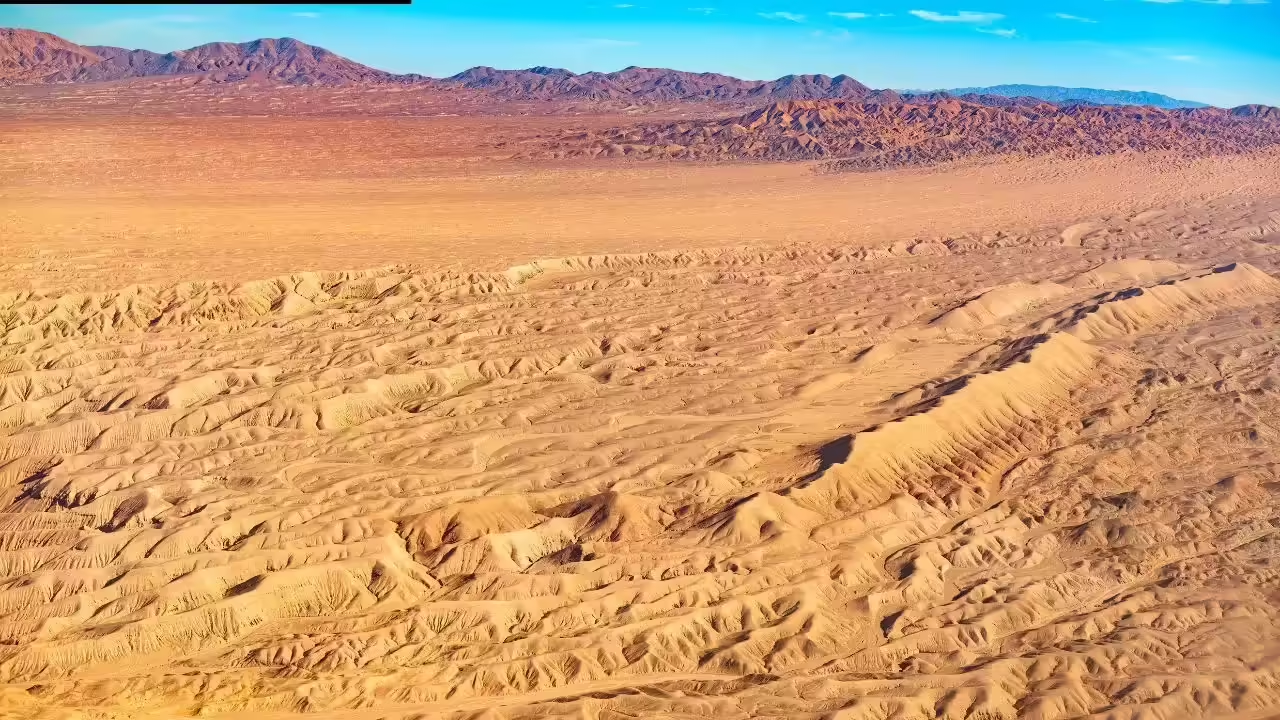
Lut is not just hot. It is one of the most visually dramatic desert landscapes anywhere on Earth. UNESCO notes that it contains a remarkable range of desert landforms compressed into a relatively small area, including yardangs, dune fields, rocky desert pavements, salt pans, and other evaporite features.
Sand Seas and Giant Dunes
NASA describes the eastern and southern portions of Lut as containing large rust-colored sand seas. Wind has shaped the sand into many different dune patterns, including linear dunes, crescent dunes, star dunes, and funnel-shaped dunes. Some of these dunes rise to around 470 meters above the surrounding desert floor, making them some of the tallest observed anywhere.
UNESCO also confirms that the sand seas are among the best-developed active dune fields in the world. This is important because it tells the reader that Lut is not a flat, empty expanse. It is a dynamic dune system, with high-relief sand formations that are constantly being reworked by wind.
Yardangs and Wind-Carved Ridges
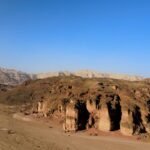
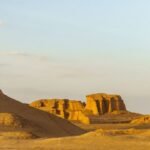
One of Lut’s most famous features is the yardang. UNESCO describes yardangs as massive corrugated ridges carved by wind and sandblasting. In Lut, they are so large and continuous that they are visible from space. UNESCO says these yardangs are among the best expressed in the world in terms of extent, continuity, and height.
That is a powerful detail for a pillar article because it creates a vivid mental image. Lut is not simply hot; it is architecturally sculpted by nature. Its ridges look almost impossible, and that makes the desert unforgettable.
Hamada, Salt Flats, and Evaporite Crusts
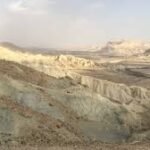
UNESCO also identifies extensive hamada zones, which are rocky desert pavements, along with salt pans, salt-crusted riverbeds, and evaporite crusts. The region includes salt polygons, tepee-fractured salt crusts, gypsum domes, salt pingos, and salt karren. These features show that Lut is a layered landscape, made up of several different desert micro-environments rather than a single uniform surface.
This diversity matters because it increases both scientific and visual richness. A reader who expects only sand will discover rock, crust, salt, and wind-carved structure. That variety improves the article’s quality and gives it more topical depth.
The Gandom Beryan Plateau
Another unforgettable feature is the Gandom Beryan plateau. UNESCO describes it as a black stony desert in the northwest core zone. Dark surfaces like this absorb more solar energy, which contributes to the desert’s extraordinary heat profile. It also creates a striking visual contrast within the landscape: black stony ground in one area, giant dunes in another, and bright salt formations elsewhere.
The plateau is important because it helps explain the heat story physically. It is not just about temperature numbers. It is about the kind of surface that sits under the sun and how that surface responds to solar radiation.
Flora: How Plants Survive in the Lut Desert
The flora of Lut is limited, but it would be inaccurate to say the desert has no plant life. UNESCO notes that the region has sometimes been described as a place of “no life,” yet it also confirms that the property does contain flora adapted to harsh conditions. The official documentation also says that biological information is limited, which means the desert remains under-documented in ecological terms.
Plants in a place like Lut survive through adaptation rather than abundance. They must handle heat, drought, salt, wind, and poor soil conditions. In the slightly wetter edges of the basin, vegetation can trap sand and create nebkhas, which are plant-shaped dunes. That is a useful reminder that even sparse plant life can influence geomorphology.
This section is important because it changes the tone of the article. Instead of treating the desert as a sterile void, it presents Lut as a difficult but living environment. That balance makes the article more credible and more engaging.
Why the Flora Story Matters
Many competitor pages mention flora only briefly or ignore it altogether. That is a missed opportunity. The flora of Lut helps demonstrate resilience, adaptation, and ecological fragility. It also gives the article a more complete scientific structure, moving it beyond “this place is hot” into “this place is an extreme ecosystem.”
For readers interested in ecology, this distinction is valuable. It shows that even in one of the harshest deserts on the planet, life still finds a way to persist. That is both scientifically meaningful and emotionally powerful.
Fauna: Animals and Insects in a Harsh Desert
UNESCO says the biological resources of Lut are limited, but it also confirms that the desert supports fauna adapted to harsh conditions, including an interesting adapted insect fauna. That is a careful and accurate way to describe the wildlife. The region is not a biodiversity hotspot packed with large animals, but it does support specialized organisms that are suited to survival in extreme conditions.
This matters because readers often imagine deserts as either lifeless or full of rare wildlife. Lut is neither extreme in that simplistic sense. It has a real, though limited, ecological community made up of desert-tolerant species that operate on the margins of what is possible.
A responsible article should avoid exaggeration here. The right approach is to acknowledge that Lut is biologically sparse, scientifically intriguing, and still not fully studied. That makes the fauna section more trustworthy and more aligned with official descriptions.
Human History and Cultural Context
Lut may look empty, but the broader region has a long human history. UNESCO notes evidence of habitation going back 7,000 years, although settlement has largely remained around the periphery because the inner desert is too dry and hostile for dense habitation.
That history matters because it gives the landscape depth. Lut is not only a natural feature; it is also part of a human story about adaptation, survival, and living beside extreme environments. For thousands of years, people have had to cope with water scarcity, distance, heat, and isolation in the wider region.
The name of the desert adds another cultural layer. Since “Lut” refers to bare land without water or vegetation, the word itself reflects how people have long perceived the area. Over time, however, the desert has also become a symbol of geological grandeur and world heritage significance.
Why This Section Helps Your Pillar Article
A strong pillar page should do more than answer a temperature question. It should explain what the place means, why it matters, and how it fits into a broader cultural and scientific landscape. Human history and cultural context help the article feel complete and authoritative.
They also make the article more versatile for search. Some readers arrive because they want science. Others want a travel context. Others may be looking for the meaning of the name or the historical background. This section helps satisfy all of those needs without weakening the main message.
Lut Desert vs Sahara vs Sonoran Desert vs Death Valley
This is the comparison section most readers actually need. It separates the largest hot desert, the most famous air-temperature record holder, and the hottest land-surface contenders so that the search intent becomes much clearer.
| Desert | Best known for | Heat fact | Why it matters |
| Lut Desert | Extreme land-surface heat, giant dunes, yardangs, salt flats | NASA recorded 70.7°C in 2004–2005 and later found a shared surface high of 80.8°C | Best fit for the warmest desert in the world keyword when surface heat is the focus |
| Sahara Desert | The largest hot desert on Earth | National Geographic notes daytime temperatures can reach about 50°C / 122°F | Famous for size, but size is not the same as the hottest surface record |
| Sonoran Desert | Major North American desert | NASA says it tied Lut at 80.8°C in satellite surface data | Important because the hottest-surface title is shared |
| Death Valley | Famous air-temperature record location | Popular discussions focus on the 130°F air-temperature record | Essential comparison point for readers who confuse air heat and ground heat |
NASA’s and UNESCO’s material make the main lesson clear: the Sahara is the largest hot desert, Death Valley is central to air-temperature history, and Lut is one of the strongest answers for the hottest land-surface conditions on Earth.
Simple Reader-Friendly Takeaway
If the question is “Which desert is the biggest hot desert?” the answer is the Sahara.
If the question is “Which desert is famous for air-temperature records?” the answer is Death Valley.
When the question is “Which desert is one of the strongest answers for the warmest desert in the world by surface heat?” the answer is the Lut Desert.
That clarity is valuable because it prevents confusion and gives the reader a practical framework for understanding desert heat.
Travel and Tourism in the Lut Desert
The Lut Desert is not a casual vacation destination. UNESCO describes it as remote, extremely dry, very hot, and in many places difficult to access. That means travel requires planning, timing, and a respect for the harshness of the environment.
Travel writers often describe Lut as surreal. The landscape includes giant formations, dunes, salt plains, and open views that stretch far into the distance. That makes it appealing to photographers, adventure travelers, geology enthusiasts, and people drawn to unusual natural environments.
Still, this is beauty with risk. The attraction is not just the scenery. It is the intensity of the place itself. Visitors need to understand that the same conditions that make Lut fascinating also make it dangerous.
Best Time to Visit
You should avoid the hottest part of the year. UNESCO notes that strong winds dominate between June and October, and travel coverage commonly warns that summer conditions can be unsafe. The safest strategy is generally to plan for cooler seasons and follow local guidance rather than improvising.
That advice matters because the desert is not forgiving. Heat, remoteness, and limited water access can quickly turn an exciting trip into a serious problem. Any travel discussion should therefore emphasize preparation, timing, and caution.
What Visitors Can Expect
Visitors can expect vast open space, dramatic dune systems, wind-shaped rock forms, salt features, and a sense of scale that is difficult to describe in ordinary city language. The most memorable thing about Lut is not only the heat. It is the combination of silence, color, texture, and immensity.
UNESCO’s description of uninterrupted vistas and varied desert landforms captures this well. The desert feels ancient, immense, and almost architectural in the way wind has carved and arranged its surfaces.
Travel Safety Advice
A responsible travel section must always remind readers that Lut is an extreme environment. Water, route planning, timing, and guide support matter. UNESCO also notes the need for strong protection against inappropriate tourism and off-road motorized access because the landscape is fragile and easily damaged.
In short, Lut is a place to appreciate carefully, not casually. It is not the kind of destination where preparation is optional. The environment demands respect.
Interesting Facts About the Lut Desert
First, Lut is one of the few places on Earth where the ground itself has become a global headline. NASA’s MODIS-based analysis found it tied for the hottest surface on Earth at 80.8°C, and NASA earlier reported a peak of 70.7°C in 2004 and 2005. That makes Lut an important reference point in the study of surface heat.
Second, Lut’s landforms are world-class. UNESCO says the yardangs are among the best expressed anywhere, the dunes are among the highest observed on the planet, and the desert contains an exceptional collection of salt and rock features. That makes the site interesting not only to climatologists but also to geologists, geomorphologists, and photographers.
Third, Lut became a UNESCO World Heritage Site in 2016, with criteria centered on outstanding natural beauty and ongoing geological processes. That recognition means the desert is not just unusual. It is globally significant.
Environmental Issues and Conservation
Lut is extreme, but it is not invulnerable. UNESCO says strong winds cause large-scale erosion, and the biological data on the site remains limited. That means the landscape is fragile and constantly under pressure from natural forces.
Conservation is essential because the value of Lut lies in its rare structure. The yardangs, dunes, salt pans, crusts, and pavements took immense time to form. Once damaged, they cannot be quickly replaced. UNESCO specifically warns about the need to manage tourism carefully and protect the property from harmful access patterns.
This makes the desert more than a curiosity. It is a delicate natural archive. Its forms tell a long story of climate, wind, salt, and geology, and that story deserves preservation.
Why Conservation Matters to Readers
Many people search for the warmest desert in the world because they are interested in heat records. But a stronger article also teaches them that heat is only one part of the story. Lut matters because it reveals how climate and geology can create extraordinary landforms over time.
When readers understand that the desert is rare, fragile, and scientifically valuable, they are more likely to appreciate it as more than just a record holder. That creates a better reading experience and a more meaningful understanding of the topic.
Pros and Cons
Pros
Lut has one of the strongest claims to being the warmest desert in the world by surface heat. NASA’s satellite research supports that claim clearly.
It offers world-class landforms, including giant dunes, yardangs, salt pans, and rocky desert pavements. UNESCO describes these features in detail.
It is a UNESCO World Heritage Site, which adds trust, prestige, and global significance.
It has a powerful visual appeal for adventure travel, photography, and geology-focused readers. UNESCO’s descriptions support that appeal.
Cons
Summer conditions can be dangerous, and the region is extremely dry and remote. UNESCO makes that hazard clear.
The desert is not suitable for casual or unprepared travel. Access is limited, and the environment is severe.
Official biological documentation is still limited, so the wildlife narrative is not as rich as some readers may expect.
The terrain is fragile, so careless tourism can damage a rare landscape that took a long time to form.
Practical Search Intent Keywords to Include Naturally
To strengthen topical depth and semantic coverage, the article should naturally include terms such as Lut Desert, Dasht-e Lut, warmest desert in the world, hottest desert in the world, air temperature, land-surface temperature, Sahara Desert, Sonoran Desert, Death Valley, UNESCO World Heritage Site, yardangs, dune fields, salt pans, Gandom Beryan plateau, and desert landforms.
These entities and phrases help the article align with how people search while keeping the writing readable, human, and authoritative. In NLP terms, they create a richer semantic field around the central topic and make the content more contextually complete.
FAQs
No. The Sahara is the largest hot desert in the world, but size is different from surface heat. National Geographic describes the Sahara as the largest hot desert and notes that daytime temperatures can reach about 50°C / 122°F. NASA’s surface-heat research points to Lut as one of the strongest answers for the hottest desert surface.
It depends on the measurement. Death Valley is famous for air temperature, while Lut is famous for land-surface temperature. NASA and other explanatory sources make clear that these are different records and should not be confused.
NASA links the heat to dark volcanic sand, limited air movement, and the desert’s basin terrain. The extreme dryness also helps the surface heat up rapidly and stay hot.
Yes, but carefully. UNESCO says the site is remote, harsh, and often inaccessible, and it warns that strong measures are needed to protect it from inappropriate tourism. Travel should be planned for safer seasons and done with respect for the environment.
Yes. UNESCO says Lut was inscribed in 2016 for criteria related to outstanding natural beauty and exceptional geological processes.
It is special because it combines extreme heat, giant dunes, massive yardangs, salt landforms, and strong scientific significance. UNESCO says its landforms are among the best expressed in the world, and NASA shows that its surface heat is among the highest ever recorded by satellite.
Conclusion
Iran’s Lut Desert is more than just a hot place. It is a scientifically important, visually dramatic, and globally significant desert that offers one of the best answers to the question of the warmest desert in the world. Its extreme surface heat, unique landforms, and UNESCO World Heritage status make it a remarkable natural wonder.