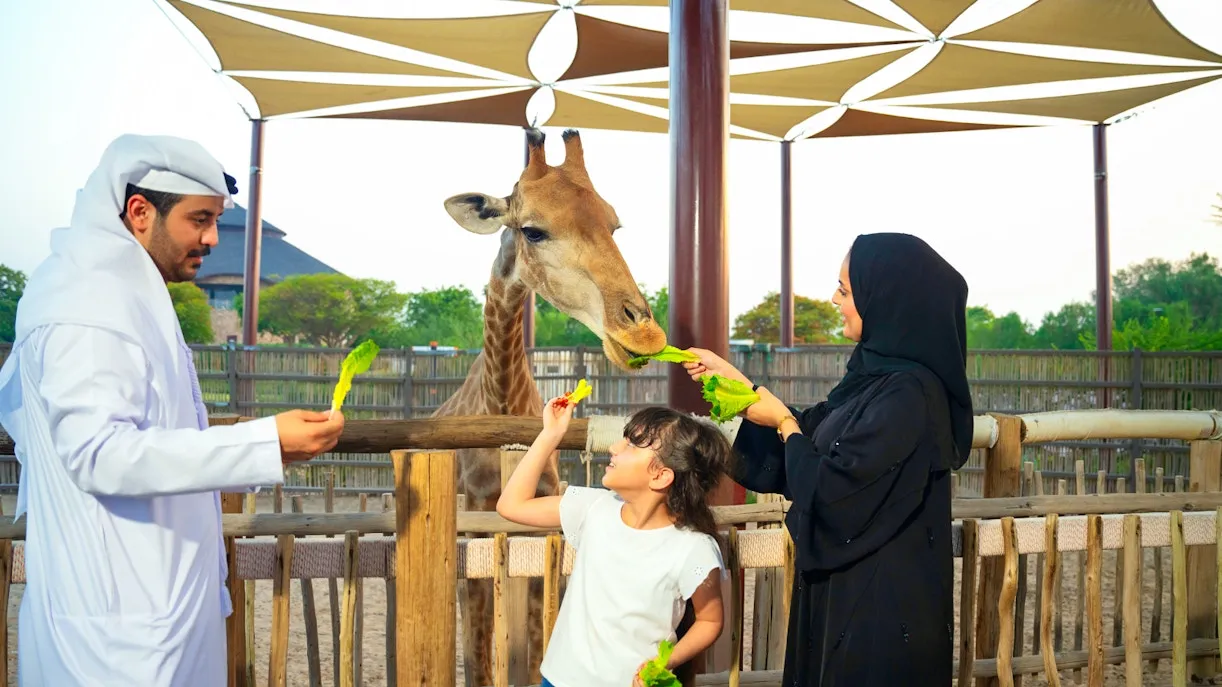
Introduction of Dubai Safari Park Timings
When you plan a trip to Dubai Safari Park, timing is more than clock-Watching — it’s mission-critical for experience optimization. Get your schedule wrong, and you danger missing the Safari Journey shuttle, sold-out unique encounters, or marquee feedings. Arrive too early, and some food outlets or shows may still be lock. This guide operationalizes timing decisions: official baseline hours, typical last-entry policies, common feeding and show windows, Ramadan and holiday caveats, real itineraries, transport timing advice, availability timing considerations, a printable timeline, and a checklist you can use immediately.
Quick facts
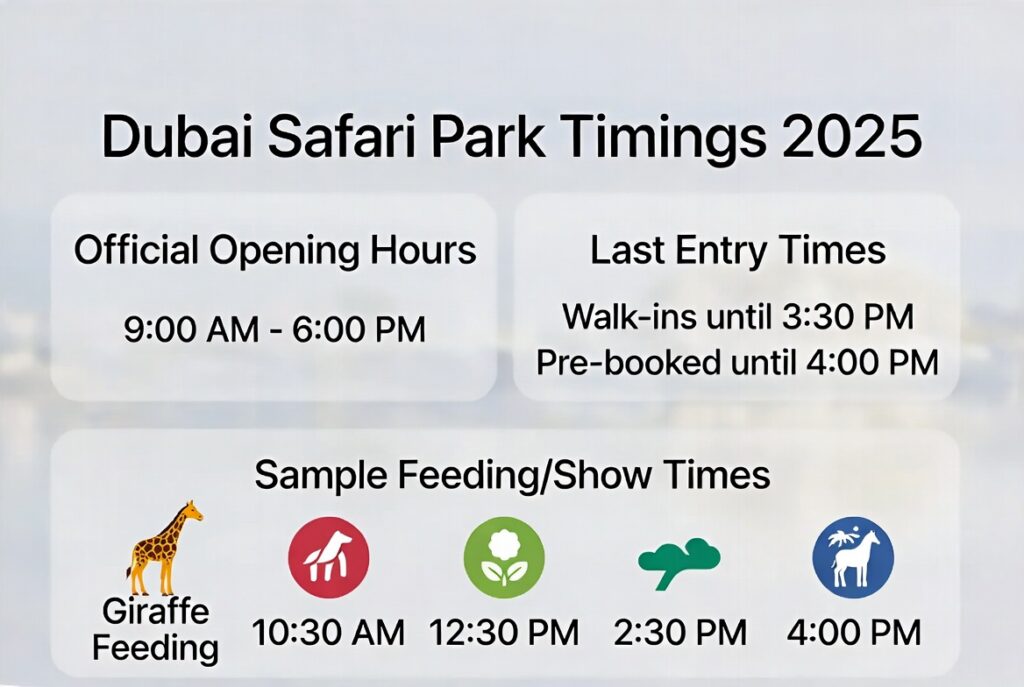
- Official opening hours (standard): 9:00 AM – 6:00 PM. Use the official park feed for last-minute confirmation.
- Common last-entry (reported): Walk-ins typically admitted until roughly 3:30 PM; many pre-booked ticket holders report admission up to around 4:00 PM (varies).
- Sample feeding times: Giraffe feedings commonly show up around 10:30 AM, 12:30 PM, 2:30 PM, and 4:00 PM (sample windows; confirm on arrival).
- Ramadan / holiday: Hours and last-entry times can shift during Ramadan and special holidays — verify with park announcements.
Official opening hours & seasonal adjustments
Standard hours — baseline
Dubai Safari Park’s canonical opening time is 9:00 AM, with general lock around 6:00 PM. Treat 9:00–18:00 as the baseline operating window you plan around. This baseline simplifies itinerary making, slot booking, and ETA reckoning.
Why you might see different hours
Third-party resellers, ticket aggregators, and older cached pages sometimes list alternate hours (e.g., 9:00–5:00). Those breaking are typically due to outdated feeds or simplified listings. Official park sheet are the source of truth; use them in front carry.
Ramadan, holidays, and special events
Ramadan and other local holidays can affect operating hours, F&B schedules, and the timing of shows. During Ramad, you may see change day schedules, iftar-related packages, or reduced daytime fun. Always check the park’s announcement channel in advance you leave.
Weather & seasonality
Dubai’s climate affects scheduling. In summer, many outdoor interactions are shifted to morn and late afternoon to avoid midday heat; in cooler months, full-day scheduling is common. If you’re arrangement to snapshot animals, seasonal light and task patterns should inform whether you target a.m.activity windows or golden-hour visits.
Last-entry rules — the practical truth
Understanding last-entry behavior is crucial for on-the-day planning. There are two practical rules to memorize:
- The ticket counter closes earlier than the gates. Many visitors report the ticket counter shutting earlier (around 4:00 PM). If you intend to buy tickets on site, don’t arrive at the last moment.
- Pre-booking buys flexibility. Pre-booked pass holders typically have more leeway, and many resellers report later admission for e-tickets. But on busy working day or holidays, even pre-booked slots can be constrained.
Planning tip: If the Safari Journey (guided bus ride) is your priority, book the earliest available slot and arrive with buffer time. Final Safari Journey sessions often run and finish by late afternoon; relying on last-minute availability is risky.
Shows & feeding times
Note: Feeding and show times change day-to-day. Treat the schedule below as a planning template — confirm exact times when you arrive.
Common feeding & show windows (example template)
- Giraffe feeding: ~10:30 AM, 12:30 PM, 2:30 PM, 4:00 PM.
- Birds / Birds of Prey: around midday and late afternoon (example: 12:00 PM & 3:45 PM).
- Children’s farm/petting sessions: mid-late morning and mid-afternoon (sample: 11:30 AM & 4:15 PM).
- Creature theatre / educational shows: frequently scheduled mid-morning and mid-afternoon (e.g., 11:00 AM & 3:00 PM on some days).
Caveats & tips
- Slots are limited. Many feedings and special encounters have a capped capacity and may require pre-booking.
- Arrive early at the feeding location and check the park’s live schedule board at the entrance. It overrides third-party lists.
- Premium encounters (e.g., rhino or elephant interactions) will often have strict start times and require a reservation.
From an NLP/content-structure view, this section targets query intent phrases like “giraffe feeding times Dubai Safari Park” and “Dubai Safari Park show timings” — useful for long-tail search capture.
How long to spend — duration & suggested itineraries
How much time you allocate depends on your goals.
Time buckets
- Half-day (3–4 hours): Highlights only — village walk, a single feeding, a short Safari Journey. Ideal for families with young children or guests on tight schedules.
- Full-day (6–8 hours): Safari Journey, multiple villages, several feedings and shows, lunch, relaxed photography. Best for enthusiasts or visitors aiming for a comprehensive experience.
- Suggested “park recommended” window: 4–5 hours to see many highlights comfortably; photographers and wildlife fans may extend to capture quiet moments.
Suggested timing-aware itineraries
Half-day family (3–4 hours)
09:00 — Arrive at opening, collect map, check live board.
09:15–10:30 — African Village and large-mammal sections.
10:30 — Giraffe feeding (sample).
11:30 — Children’s farm/petting area.
12:30 — Lunch and depart if needed.
Full-day explorer (6–8 hours)
09:00 — Arrive, check the board, head to Safari Journey (book the earliest slot).
09:45–11:30 — Safari Journey + explore principal exhibits.
11:30–13:00 — Village walking routes & a midday show.
13:00–14:00 — Lunch and rest in a shaded area.
14:00–16:00 — Post-lunch giraffe feeding, bird show, photography.
16:30–17:00 — Shopping, souvenirs, and exit procedures.
Photographer’s tip: Morning yields more active animals; late afternoon/“golden hour” gives warm directional light. Prioritize one or the other depending on whether you prefer animal behavior or atmospheric portraiture.
These itineraries align with common user intent, so they’re friendly for snippet extraction and “people also ask” parsing.
Tickets, Safari Journey & experience timing explained (table)
Below is a conceptual table (described in prose for page accessibility) that explains how different ticket types influence when you can arrive and what you can expect.
General admission (walk-in)
- Availability: Usually all day until the ticket counter closes.
- Timing notes: Many walk-ins are admitted until about 3:30 PM; risk of being turned away if you arrive late.
Pre-booked online ticket
- Availability: Valid for the date booked; slot details are in the confirmation.
- Timing notes: Pre-booking gives higher confidence and often extends admission windows slightly compared to walk-ins.
Safari Journey (guided bus)
- Availability: Scheduled sessions; book early.
- Timing notes: Booked sessions have strict departure times; final journeys conclude by late afternoon.
Special feedings/encounters
- Availability: Limited-capacity events.
- Timing notes: Require booking and have non-negotiable start times.
Practical booking advice
- Pre-book high-demand experiences (Safari Journey, giraffe feeding).
- Check the exact slot times on ticket confirmations.
- Keep a printed copy or screenshot of e-tickets.
Getting there & transport timing tips
Location & drive time
Dubai Safari Park sits in Al Warqa on Ras Al Khor Road. From central Dubai, travel time commonly ranges from 30 to 60 minutes, depending on traffic and the day of the week.
Driving & parking
- Parking: Generally free, but can fill on busy days and Weekends. Arriving near opening time increases your chances of a convenient spot.
- Traffic considerations: Allow extra buffer during morning/evening peak and on Friday/Saturday. Navigation apps with live traffic will give precise ETAs, but plan for variability.
Public transport & taxis
- Buses: The area is served by public buses, but some options require added walking.
- Taxis / ride-hailing: More convenient and usually faster for tight schedules.
- Timing tips: If you’re depending on popular transit, plan the trip reverse from your first order park slot to ensure on-time arrival.
NLP/SEO note: Including explicit location names and travel timelines and mapping phrases (e.g., “Ras Al Khor Road to Dubai Safari Park travel time”) helps the page match local search intents and maps-related queries.
Facilities, accessibility & timing-related visitor tips
Food & restrooms
- Cafés and kiosks are distributed across the park; however, their operating hours vary and may be affected during Ramadan. If you have strict timing requirements (e.g., lunchtime for a tour group), verify outlet hours or bring snacks.
Accessibility & extra transfer time
- The park is extensive. Wheelchair users or visitors with mobility considerations should plan for slower transfers between sections. Ask for assistance at the gate and request an accessibility map. Stroller users should account for uneven surfaces in some pathways.
Weather & timing
- Summer: Schedule the most outdoorsy activities for early morning or late afternoon.
- Winter: Full-day outings are comfortable, and most shows are fully operational.
Practical tip: If you need to rely on on-site services (medical, stroller rentals, special assistance), locate these early when you arrive — some counters close earlier in the afternoon.
Printable timeline & quick planning checklist
Below is a compact, copy-ready day plan you can paste to a phone note or print as a one-page timeline.
Printable Day Plan (full-day sample)
08:45 — Arrive, pick up park map, read live board for today’s feed/show times.
09:00 — Enter and head directly to Safari Journey (if booked).
10:30 — Giraffe feeding (sample time).
11:30 — Children’s farm & short walk.
12:30 — Lunch near shaded café.
14:00 — Birds/creature show or second feeding.
15:30 — Optional extra Safari Journey or village revisit.
16:00 — Photos & souvenirs.
16:30–17:00 — Exit and leave with a buffer before the park closes.
Quick checklist
- Pre-book Safari Journey & special feeding encounters.
- Carry water, a hat, sunscreen, and any necessary medication.
- Keep mobile/printed tickets and ID accessible.
- Check Ramadan or holiday announcements for adjusted hours.
This one-page timeline is intentionally framed for both human usability and for models indexing “how to plan a Dubai Safari Park visit.”
Pros & Cons — timing-focused
Pros
- The official baseline hours (9:00–18:00) make planning straightforward.
- Morning visits tend to yield more animal activity and cooler temperatures.
- Pre-booked experiences reduce the risk of being denied entry due to earlier ticket-counter closure.
Cons
- Third-party spring at a time list conflicting hours (9–5 vs. 9–6).
- Feeding and show times are dynamic and can change day-to-day.
- Ramadan and holiday adjustments can introduce last-minute schedule shifts.
From an NLP standpoint, this section answers comparative queries such as “should I visit Dubai Safari Park in the morning or the afternoon?” and helps capture users at the decision stage.
Conservation, seasonal animal behavior & timing implications
Dubai Safari Park balances visitor access with animal welfare and conservation programs. Timing choices have direct effects on animal behavior and welfare:
- Feeding times are used both to enrich animals’ routines and to provide people with better viewing windows. Attend public feedings to watch more active behavior.
- Nocturnal or special tours (if available) high point species that are more active after dark; these are separately scheduled and usually require appointment.
- Animal welfare adjustments: Park staff may change activity times or move interactions indoors to protect animals in extreme heat or for medical aim.
For content strategists and search models, including conservation and welfare notes increases semantic richness and addresses intent nodes like “is Dubai Safari Park ethical?” and “animal welfare Dubai Safari Park.”
Interesting timing hacks & photography tips
- Target the first feeding: Morning feedings often display the highest animal activity — ideal for documentary-style shots.
- Golden hour portraits: Late afternoon provides soft, directional light for atmospheric animal and landscape photography.
- Split visits: If logistically workable, visit twice — a morning visit for gross Activity and a later visit on another day for golden-hour light and quieter paths.
- Ask staff for the live board: Always trust the park’s live schedule over third-party sites for the day’s require times.
FAQs
A: The park’s official standard hours are 9:00 AM to 6:00 PM. Always verify the day’s hours via the official Dubai Safari Park site before visiting.
A: Many ticketing sources report last admission for walk-ins around 3:30 PM and last admission for pre-booked ticket holders around 4:00 PM, with the ticket counter typically closing around 4:00 PM. These windows can vary, so pre-book when possible.
A: Yes — feeding sessions and shows are scheduled but subject to day-to-day change. Check the daily board at the park entrance or ask staff at the gate for the exact schedule.
A: Yes — past Ramadan schedules and holiday announcements have shown adjusted hours (for example, different opening times or special Iftar packages). Always confirm with the park’s official announcements.
A: Plan 3–4 hours for a half-day visit or 6–8 hours for a full-day experience (Safari Journey + shows + multiple feedings). The park suggests about 4–5 hours to see many highlights.
Conclusion
Timing is the single most important workable variable that will make your Dubai Safari Park visit memorable. Use 9:00 AM as your starting baseline, pre-book high-demand test (Safari Journey and special feedings), and aim to arrive early for the best bodily activity. Watch for Ramadan or holiday schedule adaptation and prioritize the park’s live board for day-of times.