Introduction
This Compact Guide brings practical planning, natural-history context, and low-impact field advice for travellers, photographers and naturalists visiting Arabia’s deserts. It covers the vast Rub’ al Khali, the red dunes of An-Nafud, the visitor-friendly Wahiba Sands and the connecting Dahna Corridor, and distils itineraries, safety checklists, gear tips and conservation rules so you can explore responsibly and confidently.
Quick facts & climate
- Region: the desert systems of the Arabian Peninsula cover roughly 2.3 million km² of arid and semi-arid lands.
- Summer extremes: interior temperatures can climb to 45–55°C during heat waves.
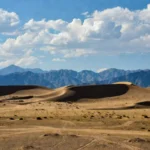
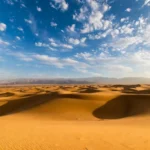
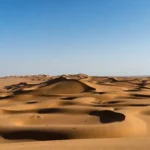
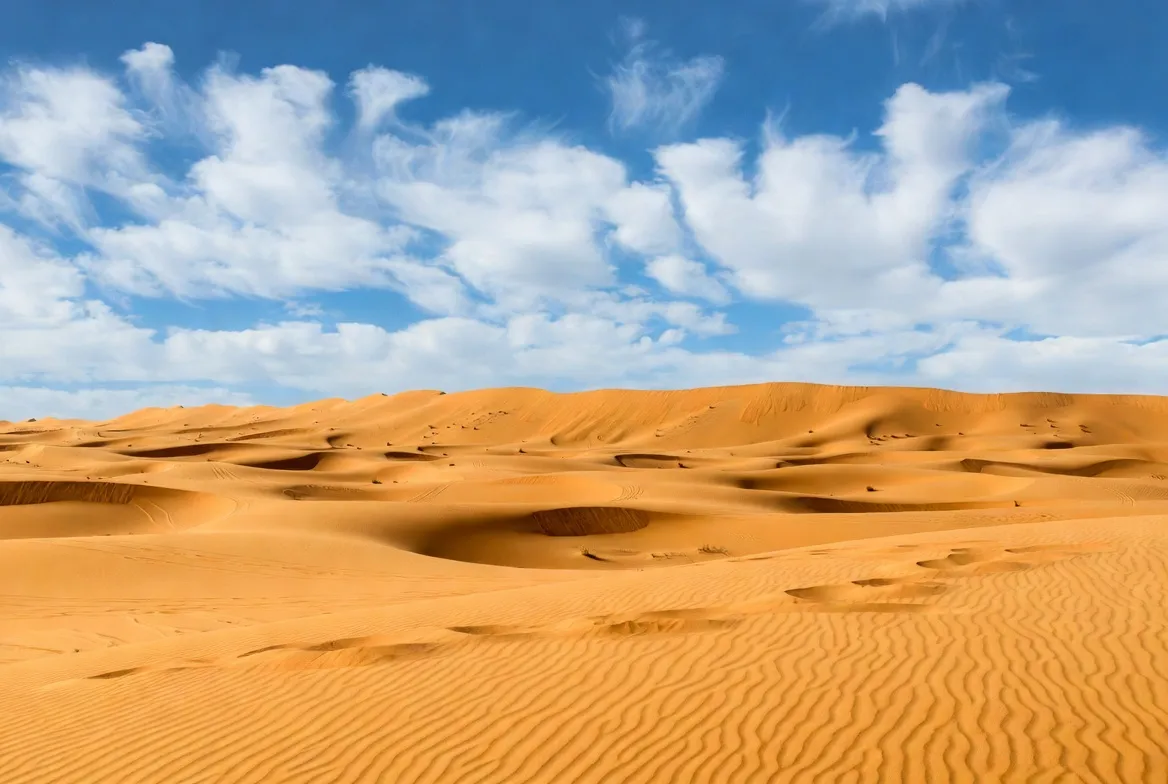
- Dune sizes: dune ridges range from small ripples to giant dunes that rise hundreds of metres; dune morphologies reflect wind regimes and sediment supply.
- Major terrain types: continuous sand seas (ergs), gravel plains (hamada), salt pans (sabkhas), and rocky plateaus (shrublands and escarpments).
- Best visiting months: October–March for comfortable daytime conditions and cool nights—ideal for photography and overnight camping.
What makes Arabia’s deserts unique — geology, dunes and “Green Arabia”
Geology & dune systems
The deserts you’ll see are shaped by persistent wind patterns and the availability of sand and sediment. Morphologies vary, and each dune type is a record of wind directionality and history:
- Crescentic (barchan) dunes form where sand is limited, and winds blow consistently from one direction — graceful crescent shapes that migrate across flats.
- Linear dunes arise where winds come from two dominant directions and build long parallel ridges that can span many kilometres.
- Star dunes develop where winds shift directionally, piling sand into radiating arms and producing some of the tallest dune forms on Earth.
Taken together, dune geometries are like pages in the region’s aeolian archive — they tell a long story about shifting wind regimes and deep-time climate.
Paleo-climate and “Green Arabia”
Over the late Quaternary (the last several hundred thousand years), Arabia’s climate wasn’t always the dry expanse it often appears to be today. Modern palaeoenvironmental studies — notably analyses of speleothems (cave stalagmites), lake sediments and pollen records — show recurrent wetter intervals. During those intervals:
- Rivers flowed more persistently, lakes were more common, and vegetation cover expanded.
- Human groups inhabited areas that are desert now, leaving archaeological traces along ancient river courses.
- These wetter episodes allowed mobility and settlement patterns quite different from those possible today.
That legacy is called “Green Arabia.” It’s important for two reasons: archaeologists use palaeoclimate maps to find likely sites, and ecologists use the history to Understand how species and groundwater systems responded to past change — useful for present conservation planning.
Major deserts & what to expect
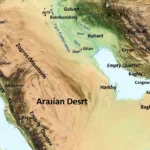
The Arabian Desert — the big picture
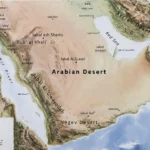
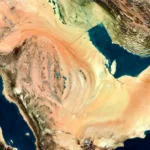
When we say “the Arabian Desert”, we mean the full system across the peninsula: enormous sand seas, rock pavements and uplands. Travel here means vast horizons, strong sun and large diurnal temperature swings. Prepare for remoteness and a landscape that rewards measured curiosity.
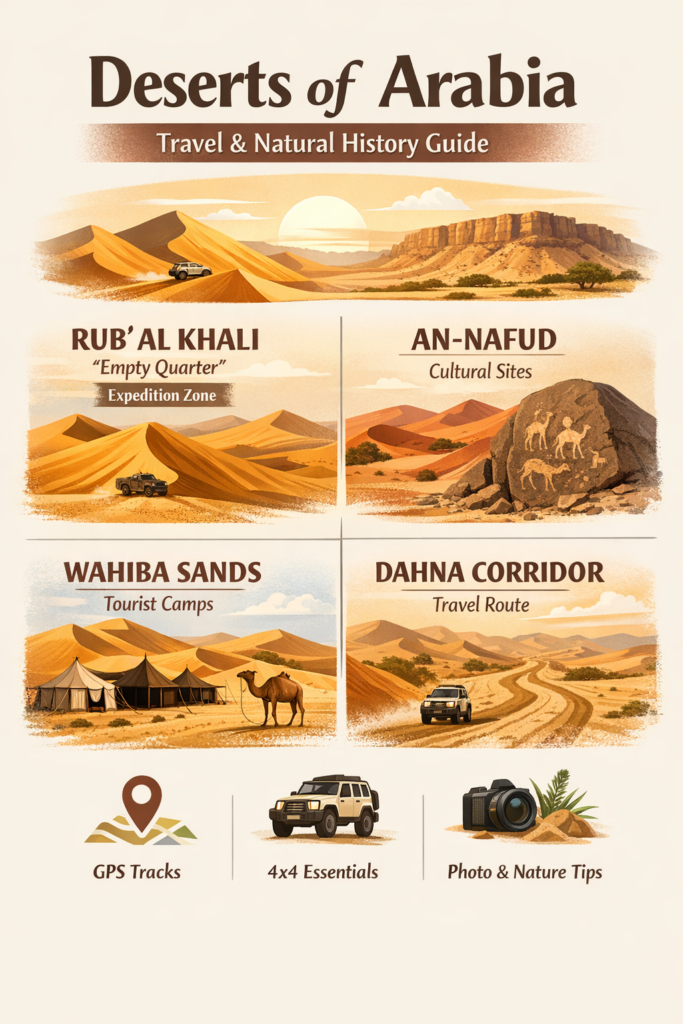
Rub’ al Khali — the Empty Quarter.
The Rub’ al Khali is the largest continuous sand desert on the peninsula and one of the largest on Earth. Key points for visitors and researchers:
- Best for: long crossings, geomorphology studies, high-value remote photography.
- Access: extremely remote; deep crossings need official permits, multiple support vehicles, cached fuel and an extraction plan.
- Risks: breakdowns and navigational errors are the most serious hazards. Plan redundant communications and recovery contingencies.
An-Nafud — red dunes and culture
An-Nafud is famous for its red sands and cultural edges. It’s more accessible than the Empty Quarter and makes excellent day trips or short overnight excursions:
- Best for: cultural day trips, accessible dune photography, and visits to rock art on the margins.
- Access points: regional hubs such as Hail and Tabuk are typical staging towns (see key places list above).
- Culture and history: caravan routes and rock inscriptions around the edges provide meaningful context for visitors.
Wahiba Sands — tourism-friendly dunes
Wahiba Sands (also known as Sharqiyah Sands) is Oman’s most established desert tourism area:
- Best for: first-time desert visitors, sunrise/sunset photography, guided dunes and overnight camps.
- Facilities: local operators run fixed camps, roofed tents and guided dune drives — a great place to acclimatise before deeper travel.
- Nearby: short drives from Muscat and accessible for weekend trips.
Dahna Corridor — the travelling link
The Dahna corridor links different ergs with a band of dunes and gravel. It offers firmer surfaces at times, but can hide soft patches:
- Best for: overland routing, staged crossings, and connecting different dune systems.
- Advice: local knowledge is valuable — the corridor’s firmness varies by season and locality.
When to go — season windows by activity
Choose months according to the primary activity:
- Comfortable sightseeing & photography: Oct–Mar — cooler days and long golden hours.
- Wild camping & multi-day crossings: Nov–Feb — lower heat risk and more stable weather.
- Birding & coastal visits: Nov–Mar — migratory corridors are active.
- Avoid unless prepared: Apr–Sep — extreme heat dominates much of the interior.
Coastal fogs and mountain microclimates (for example, in Omani highlands) can alter local conditions quickly; plan conservatively.
Permits, vehicles and safety essentials
Permits & coordination
Deep desert travel often requires permits. Governments look for evidence of planning and rescue contingencies for extended crossings. Licensed local operators typically manage permit paperwork and can advise on changing rules. For cross-border trips, expect additional paperwork and customs processes.
Vehicles & gear
A properly prepared vehicle is the single biggest safety factor:
- High-clearance 4×4 with a low-range transfer case (diff locks were usable).
- Dual spare tyres plus a repair kit, air compressor, and tyre gauge.
- Recovery gear: snatch straps, rated shackles, a certified winch or recovery boards.
- Dual batteries and redundant power systems; extra fuel jerry cans with at least 25% contingency.
- Communications: satellite communicator (Iridium or similar), PLB (personal locator beacon), and VHF/CB as local backup.
- Water: minimum 6–8 L per person per day, more in hot months or for strenuous activities.
- Mechanical kit: belts, filters, basic tools and the know-how to use them. Consider pre-arranged mechanical support if travelling in very remote corridors.
Navigation & redundancy
Never trust a single instrument. Use GPS, offline topographic maps, a compass and printed route notes. Carry GPX tracks for the planned route and leave trip plans with a contact and local authorities. Redundancy saves lives.
Health & safety tips
- Avoid heavy exertion during midday; schedule strenuous work for morning or evening.
- Sun protection: wide-brim hat, long-sleeved shirts, broad-spectrum sunscreen.
- Protect lungs and eyes from blowing sand: goggles and light scarves or dust masks.
- Keep sand out of air intakes; change or clean air filters frequently if conditions are dusty.
- Know heat-illness signs (heat exhaustion vs heat stroke) and basic first aid for trauma and dehydration.
Ready-made itineraries
These are modular templates — adapt to your permit rules, vehicle capability and support network.
3-day Wahiba Sands (beginner) — Oman
- Day 1: Stage from Muscat, drive to Wahiba, arrive before sunset; short dune walk and camp with a pre-booked local operator.
- Day 2: Sunrise dune photography, guided short dune driver lessons, visit Wadi Bani Khalid or local villages.
- Day 3: Return to Muscat; optional coastal detour or stop at a coastal birding site.
7-day Desert Loop
Blend Wahiba with border-fringe sand seas like Liwa and a desert oasis day:
- Day 1–2: Wahiba Sands and coastal birding.
- Day 3–4: Transfer to Liwa fringe (overnight dunes and cultural stops).
- Day 5: Oasis and photography, short hike to fossil or rock art sites.
- Day 6: Rock art day and local community visit.
- Day 7: Return to hub city.
14-day Deep Desert Expedition (advanced) — Empty Quarter crossing
This is a serious expedition requiring permits, two or more vehicles, and an extraction plan:
- Pre-expedition: cached fuel, mapped extraction points, medical plan.
- Expedition days: conservative daily distances, one rest day, rotating vehicle leadership and routine mechanical check schedule.
- Emergency: established SOS procedure with satellite operator and local authority contacts.
Photography & storytelling tips
Photography in desert landscapes rewards planning and a disciplined kit list.
Golden hour & composition
- Shoot ridge lines at low sun for texture and deep tonal contrast.
- Use foreground texture (salt crusts, plant material) to give scale and depth.
- Include a human or camel for scale in wide shots — it transforms an abstract pattern into a story.
Lens kit recommendations
- 35mm or 50mm prime for street and storytelling portraits.
- 70–200mm for compressed dune lines, silhouettes and distant wildlife.
- A fast wide aperture (e.g., f/2.8 or faster) is ideal for astrophotography.
- Bring desiccants and keep bodies and lenses in sealed bags when not in use.
Astrophotography
- Use a sturdy tripod, a wide-angle lens and an intervalometer for star trails.
- Pre-visualise foreground silhouettes and shoot during moonless nights for the best Milky Way capture.
Gear care
- Sand is your gear’s enemy. Store equipment in zip-lock bags and use microfibre cloths to clear grit.
- Change air filters frequently and protect camera ports from sand ingress.
Flora & fauna — who lives here
Even harsh deserts support specialised life.
Plants
- Trees and shrubs (e.g., species of Acacia) occur near wadis and oases.
- Halophytes inhabit sabkhas and salt flats.
- Cryptobiotic crusts stabilise dunes and are fragile — avoid walking on them.
Animals
- Mammals: reintroduced ungulates like the Arabian oryx, gazelles, and small carnivores such as the red fox.
- Reptiles: geckos and monitor lizards are common in sheltered microhabitats.
- Birds: migratory raptors and many passerines use coastal corridors and freshwater stops; oases are important refuelling sites.
Field rules: watch wildlife from a respectful distance, avoid nest disturbance and never remove or collect plants or archaeological material.
Human history, cultures & archaeology
Arabian sands conceal traces of past life: caravan tracks, rock art, and surface scatters of habitation. The “Green Arabia” episodes helped shape human dispersal and left traces along palaeoriver courses and wadis. When visiting cultural or archaeological sites:
- Always go with licensed guides who respect local laws.
- Ask permission before photographing people, especially in conservative or rural communities.
- Do not remove artefacts — surface finds are archaeological resources, not souvenirs.
Survival tips & main challenges
The top hazards are: extreme heat, becoming lost, and mechanical failure.
Practical survival guidance
- Pack redundancy:至少 two independent communication methods, extra fuel, extra water and recovery gear.
- Never attempt unsupported deep crossings alone — at least two vehicles are the safety minimum.
- Learn basic vehicle recovery techniques and tyre management (deflating for softer sand, re-inflating for roads).
- If you become stuck: avoid excessive revving (which buries you further), use recovery planks, lower tyre pressure, and dig carefully. Leave markers and signals for search teams; deploy high-visibility tarps and the PLB if need be.
Choosing operators & tourism options
Top attractions
- Sunrise and sunset panoramas over the Empty Quarter fringes and starfields over remote camps.
- Liwa’s prime dunes for sweeping desert profiles.
- Rock art and caravan routes for cultural context.
- Established Wahiba Sands camps for an accessible desert experience.
Activities
- Dune driving (prefer established routes and locally guided excursions).
- Camel treks, sandboarding in designated or non-protected areas, and night-sky camping.
- Small community homestays and cultural experiences with local families.
How to choose an operator
- Check licenses and safety records; ask for vehicle maintenance logs and driver qualifications.
- Prefer local, small operators who employ community guides and follow conservation best practices.
- Ask about evacuation procedures and insurance coverage for remote travel.
Interesting facts & conservation notes
- The Empty Quarter’s area rivals the size of many countries.
- Star dunes are globally rare and can reach hundreds of metres in height.
- Speleothem records and lake sediments show that parts of Arabia were repeatedly wetter, shaping the archaeology and biodiversity patterns we see today.
Fragile systems
- Cryptobiotic soils and interdunal plants are slow to recover from damage; stick to tracks where possible.
- Oases and shallow aquifers are vulnerable to over-exploitation; support sustainable tourism initiatives that respect water budgets.
- Reintroduction programs (e.g., for the Arabian oryx) illustrate how careful management can reverse local extinctions.
Quick comparison table — major deserts
(Plain language summary)
- Rub’ al Khali (Empty Quarter): Very remote; best for expeditions and geomorphology; very high difficulty; minimal tourism infrastructure; high conservation sensitivity.
- An-Nafud: Regionally accessible; good for cultural day trips and moderate dune photography; medium difficulty; limited tourism services.
- Wahiba Sands: Easily reached from Muscat; visitor-friendly camps and guides; low–medium difficulty; established tourism amenities.
- Dahna Corridor: Variable access; serves as a travel link; medium difficulty; high sensitivity in places.
Pros & Cons
Pros
- Dramatic landscapes and unique photographic opportunities.
- Deep archaeological and paleo-climate significance.
- Live cultural experiences and variable access points.
Cons
- Harsh natural hazards (heat, remoteness).
- Permit and logistical complexity for deep crossings.
- Fragile ecosystems require low-impact visitation.
Ready checklist — before you go
Documents & planning
- Confirm permits and file a trip plan with local authorities.
- Carry copies of passport, vehicle registration and insurance.
Vehicle & tools
- Full mechanical service, spare parts, recovery kit, and extra fuel.
- Test all electronics and communications before departure.
Safety
- Satellite communicator, PLB, comprehensive first aid kit, and medicines for heat illness.
Supplies
- Water (6–8 L per person/day minimum), non-perishable high-energy food, sun protection and protective clothing.
FAQs
A: Only with experienced operators, multiple vehicles, satellite communications, and proper permits. Solo attempts are highly risky.
A: October–March for comfortable days and clear nights.
A: Yes — rock art, caravan remains, and surface finds exist in many regions; visit with licensed guides and do not removeartefactss.
A: You need a high-clearance, properly prepared 4×4 with sand-driving experience; novice drivers should hire local drivers or guides.
Conclusion
Whether you’re after sunrise dune panoramas, archaeological traces of “Green Arabia,” or a full expedition, this guide gives the essential tools and cautions to plan well. Travel prepared, minimise impact, and let respectful curiosity shape your desert experience.