Desert Safari Outfit — What to Wear
You are about to enjoy the scenery of broad daylight, murmurs of sand, and exaggerated changes in Temperature. When used right in a desert safari outfit, it is not just something that will have you looking great in the photos, but also serves to protect your skin, keep the grit out of your eyes, assists your body in thermoregulation, and keeps you relaxed during dune-bashing, camel ride, and camp meals. It also covers fabric science, fit rules, footwear choices, photography tips, 12 packable outfit combos, a printable packing checklist, cultural modesty notes, troubleshooting for kids and pregnant travellers, plus publisher-focused implementation tips so this page ranks and converts.
Why clothing matters in the desert — the four core hazards
- Sun & UV exposure: The uncovered skin and eyes are exposed to large doses of ultraviolet light. Breathable long coverings minimize the risk of burns and heat loads.
- Sand and abrasion.n Sand is coarse and everywhere; it gets into zippers, into phone ports, and silicone seams. Problems are minimized by coverage, safe pockets, and easy closures.
- Thermoregulation: Hot in daytime; cool in the evening. Light clothing and fabrics that transfer moisture off the skin are necessary.
- Cultural background: In most places in the Gulf, the rules of modesty are still relevant; decent attire would ensure that people are not stared at and that their time is uneventful.
Fabrics & fit — what to choose and what to avoid
Best fabrics
- Linen: Extraordinarily cool and fast drying; suits, dresses, shirts, and loose pants. The open weave of linen permits convectional cooling.
- Lightweight cotton (voile, lawn): Soft, easy, familiar – good with tees and blouses. Select a tighter weave of woven cottons to protect themselves against the wind.
- Technical performance is a hybrid: Fabrics that are engineered to keep the user cool by wicking moisture and contain UV protection are the ones used during high-activity days and dune-bashing.
- Light merino or thin wool-blends: When staying overnight, merino is thermostatically regulated and resistant to odor.
Fit rules
- Loose to regular is favorable to airflow and cooling, e.g., loose shirts, wide pants, and dresses that are unfitte dressesd.
- Long pants and long sleeves keep off the UV and prevent sand from scoring your flesh.
- Do not use tight clothing that covers the body and prevents the evaporation of heat.
What to avoid
- Heavy denim: Holds heat, retains sand, dries slowly.
- Inexpensive non-breathable polyester: May result in sweatiness and stickiness.
- Dangling jewelry or long tassels during dune-bashing: They can snag and be lost.
Outfit guide by safari type — practical, visual, packable looks
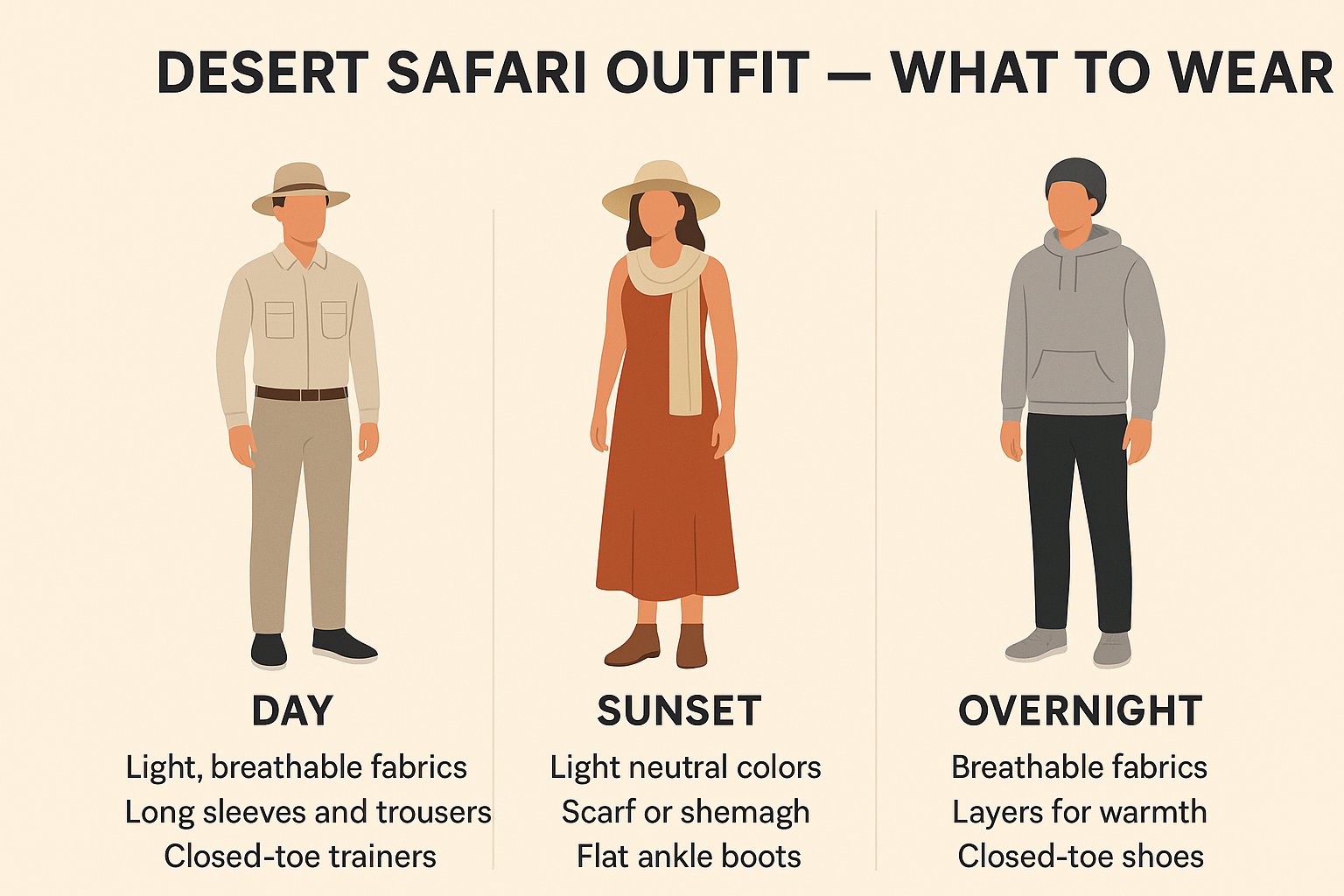
Morning safari (cool starts that warm quickly)
Why: Morning trips often begin pre-dawn. Temperatures are cool, then rise fast — layering is the key.
Men: Linen long-sleeve button-up, breathable joggers or chinos, light trainers, cap or beanie pre-sunrise.
Women: Lightweight trousers or a maxi skirt, airy blouse, low-profile sneakers, scarf.
Packable looks (morning):
- Linen button-up and chino jogger, and white low-profile trainer, all phototo and breathable, classic.
- Maxi dress + cotton shirt + breathable sneakers (slips) + wide-brim hat — womanly, modest, and comfortable.
- Utility jumpsuit in lightweight + thin layered shirt + trainers – easy to carry one-piece that fits in a bag.
Sunset safari
Sunset is prime time for photos — warm light and cooler air. Choose colors that play well with golden sand.
Colors to consider: Teal, rust, olive, terracotta, and deep jewel tones for strong contrast.
Men: Breathable shirt + light overshirt or overshirt jacket + ankle boots or trainers.
Women: Flowy linen or rayon dress, or wide-leg trousers + shoulder cover; bring a cardigan for after-sunset.
Packable looks (sunset):
- Flowy terracotta maxi + flat ankle boots. With denouement photographer shots, these boots are easy to wear.
- olive linen trousers + off white top + grey scarf = balanced, tonal.
- Rust shirt + beige chinos + trainers made of leather-like material – warm, earthy palette.
Style tip: Avoid pure, stark white in harsh sun — off-white and warm Neutrals reduce overexposure in digital photography.
Overnight safari (camp comfort + cold nights)
Why: Overnight trips demand both daytime breathability and nocturnal warmth.
Base layers: Daytime outfit in linen or cotton.
Night layer: Lightweight fleece, packable down, or warm hoodie, extra socks.
Packable looks (overnight):
- Lightweight fleece + day linen shirt + joggers + trainers – day-to-night.
- Base layer + cotton set + warm hoodie + beanie– cozy, tight.
- Maxi dress, warm wrap, slip-ons, camp-fashionable.
Activity-specific clothing and safety
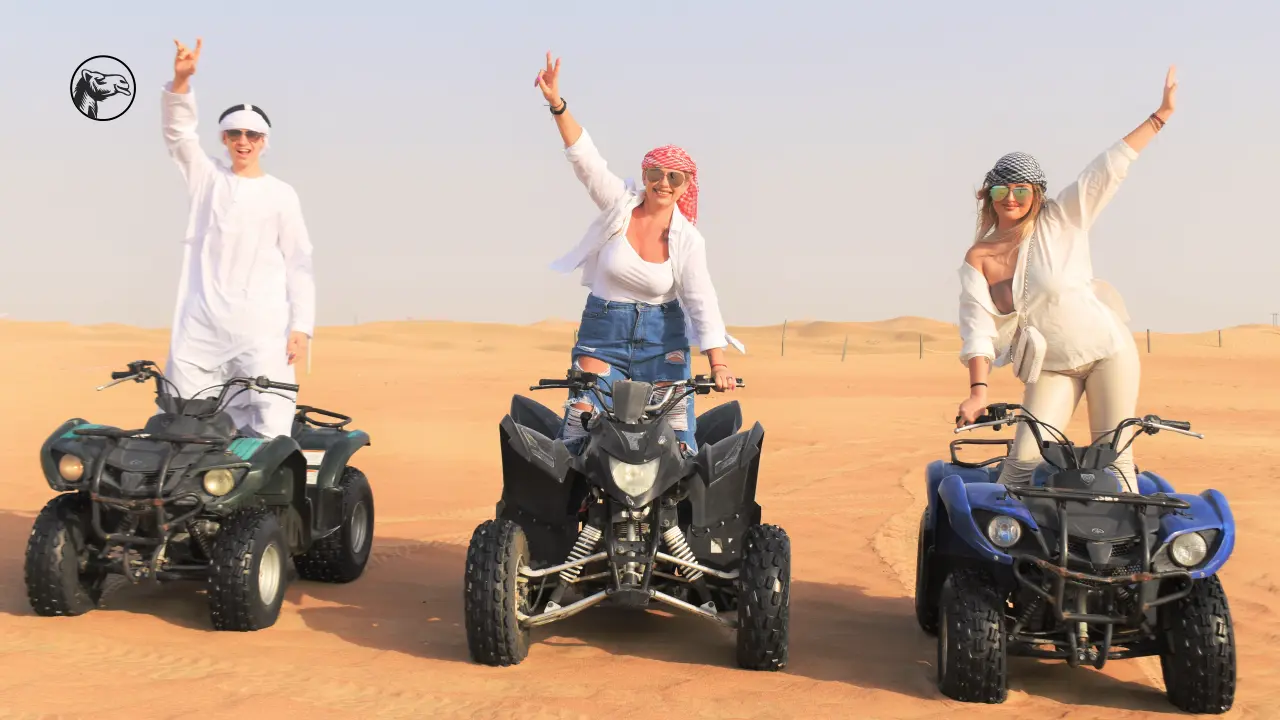
Dune-bashing & buggies
Dune-bashing tosses sand and jolts you. Follow these rules:
- Secure sunglasses with a strap.
- Avoid loose scarves that can fly off.
- Tuck in shirt tails and avoid long, billowing skirts during rides.
- Closed-toe shoes are mandatory.
- Keep valuables zipped in a secure bag.
Camel ride
For camel comfort and dignity:
- Avoid very short skirts or exposed legs; prefer trousers or long skirts.
- Bring a small cushion for saddle comfort if you’re sensitive to pressure points.
- Hold on to low-profile straps and sit with a straight back.
Photoshoots & “flying dress” shots
Want dramatic images?
- Use flowing fabrics like rayon, chiffon, or lightweight cotton blends.
- Pick saturated, solid colors that contrast with the sand: azure, emerald, rust.
- Avoid tiny, busy patterns near the face — they can moiré or distract.
- Bring an assistant to help with dress hems or hair in strong winds.
Footwear — exactly what to wear
Best choices
- Lightweight closed-toe trainers / running shoes: Protect toes and provide grip; easy to wash.
- Light hiking shoes: Good for longer walking routes and rougher terrain.
- Sport sandals with heel strap: Breathable and quick-drying — trending in 2025 for hot-day comfort.
What to avoid
- Flip-flops: They sink in sand and provide no protection.
- Heavy boots: Overkill for most desert trips; they trap sand unless you need strong ankle support.
Special cases & troubleshooting
Kids
- Breathable layers, a hat with a chin strap, sturdy closed shoes, and sunscreen.
- Pack a spare outfit for spills or wet sand.
- Give kids a small, fun water bottle and snacks.
Pregnant travellers
- Notify the operator about pregnancy — dune-bashing intensity may be unsuitable.
- Prefer gentler activities, choose supportive shoes, and avoid overheating.
- Bring a doctor’s note if required by tour operators or insurance.
Couples & photoshoots
- Coordinate colors: one neutral, one accent, looks polished.
- Carry a small sewing kit or safety pins for quick fixes.
Quick comparison table — fabrics & footwear
| Item | Pros | Cons | Best for |
| Linen | Very breathable, cool | Wrinkles easily | Sunrise/sunset, photos |
| Lightweight cotton | Comfortable, soft | Holds moisture | General daytime use |
| Technical wicking | Dries fast, UV options | Synthetic feel | Active dune-bashing |
| Trainers (light) | Protection, grip | Gets sandy | All-round desert use |
| Hiking sandals (strapped) | Breathable, quick-dry | Less toe protection | Hot days, short walks |
| Heavy boots | Ankle support on rocks | Too hot, sand trap | Rugged walks (rare) |
Pros & Cons
Pros
- Practical, detailed advice for morning, sunset, and overnight safaris.
- Photo-ready outfit suggestions and fabric guidance.
- Actionable packing checklist and special-case tips.
Cons
- Branded items and buy links change with seasons — update links quarterly.
- Regional climate differences (e.g., Ras Al Khaimah vs. Liwa) require local tweaks.
FAQs
A: Yes, shorts are okay for daytime tours, but avoid very short skirts or revealing clothes for camel rides, and be mindful of local modesty in public areas.
A: Breathable closed-toe trainers or lightweight hiking shoes are the best all-around options; sport sandals with straps are a breathable alternative. Avoid flip-flops.
A: Yes. Desert nights can be significantly cooler than daytime; bring a light jumper or hoodie, especially for overnight camp stays.
A: Both are good; linen is more breathable and cool but wrinkles easily, while lightweight cotton is comfortable and versatile—technical blends are best for high-activity days.
A: Breathable layers, a hat with a chin strap, closed shoes, and sunscreen. Pack a spare outfit in case the kids get wet or very sandy.
Location & environment notes
If targeting specific areas, add local context:
- Dubai / Lahbab: Popular for sunrise and sunset safaris. Peak season: November–March. Operators usually include pickup, refreshments, and camp experiences.
- Ras Al Khaimah (RAK): Quieter red dunes — similar clothing needs; check local temps before packing.
- Liwa: Very large, remote dunes — bring extra water, sturdy shoes, and a reliable operator for long walks.
Conclusion
The appropriate desert safari attire is a Combination of protection, comfort, and beauty. Wear clothes that are lightweight and breathable (linen, lightweight cotton, technical) or long-sleeved and long-troused to cover the body; wear secure and closed-toed shoes to be active; wear in layers at night. Keep a scarf, good sunscreen, and common-sense modesty in mind. With the right choices, your desert trip will be safe, comfortable, and photo-ready.