Introduction
The Atacama Desert — centered on San Pedro de Atacama — is a surreal landscape of salt flats, steaming geysers, turquoise high-altitude lagoons and some of the clearest skies on Earth. This guide helps you compare tour types, build 1–4 day itineraries, plan for altitude and packing, and pick reputable operators so you get the most out of your Atacama adventure.
Quick snapshot: must-see tours & what they include
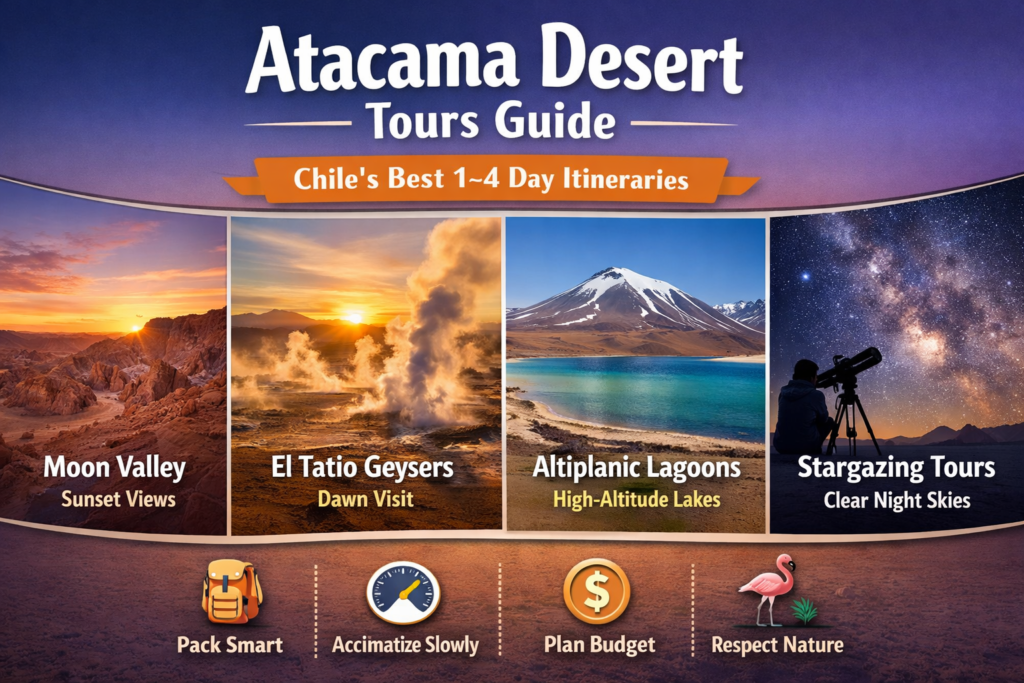
- Valle de la Luna (Moon Valley) — Sunset vistas, razor-rock silhouettes, salt crusts, and dramatic color shifts. Typically, a late-afternoon/early-evening excursion.
- El Tatio Geysers (sunrise) — Predawn pickup, extensive steam fields, and strong morning cold. Best at sunrise when eruptions and steam columns form dramatic shapes.
- Altiplanic lagoons & Piedras Rojas — High-altitude turquoise lagoons framed by volcanoes and red-stained rocks; astonishing for photography.
- Salar de Atacama & Laguna Cejar — Flamingo habitats and ultra-salty soaking lagoons where buoyancy is high.
- Stargazing / Observatory visits — Guided evenings with telescopes and basic astrophotography instruction; weather- and moon-phase dependent.
- Full-day loops / multi-site tours — Combine lagoons, flamingos, high plains,s and geological features into a single long day.
- Multi-day packages & luxury lodges — Curated multi-day experiences that include transfers, meals, and small-group activities.
Comparison table — Tour types at a glance
| Tour Type | Typical Duration | Best for | Typical Price (USD) | Main tradeoffs |
| Half-day (e.g., Valle de la Luna sunset) | ~3 hrs | Short visits; low altitude | $30–$80 | Quick; limited sites |
| Full-day (lagoon loops, Salar) | 8–10 hrs | Day-trippers who want variety | $60–$150 | Long drives; higher altitude |
| Sunrise (El Tatio) | 6–9 hrs (very early) | Photographers, sunrise hunters | $50–$120 | Very cold; early start |
| Multi-day package (3–4 days) | 3–4 days | First-time visitors | $300–$2,000+ | Costly but logistic-heavy |
| Luxury lodge / curated | 2–7 days | Comfort & small groups | $700–$2,000+ | Expensive; fewer flexible options |
| Stargazing & observatory | 2–3 hrs (night) | Astronomy buffs | $30–$120 | Weather and moon dependent |
How the Atacama works — short overview
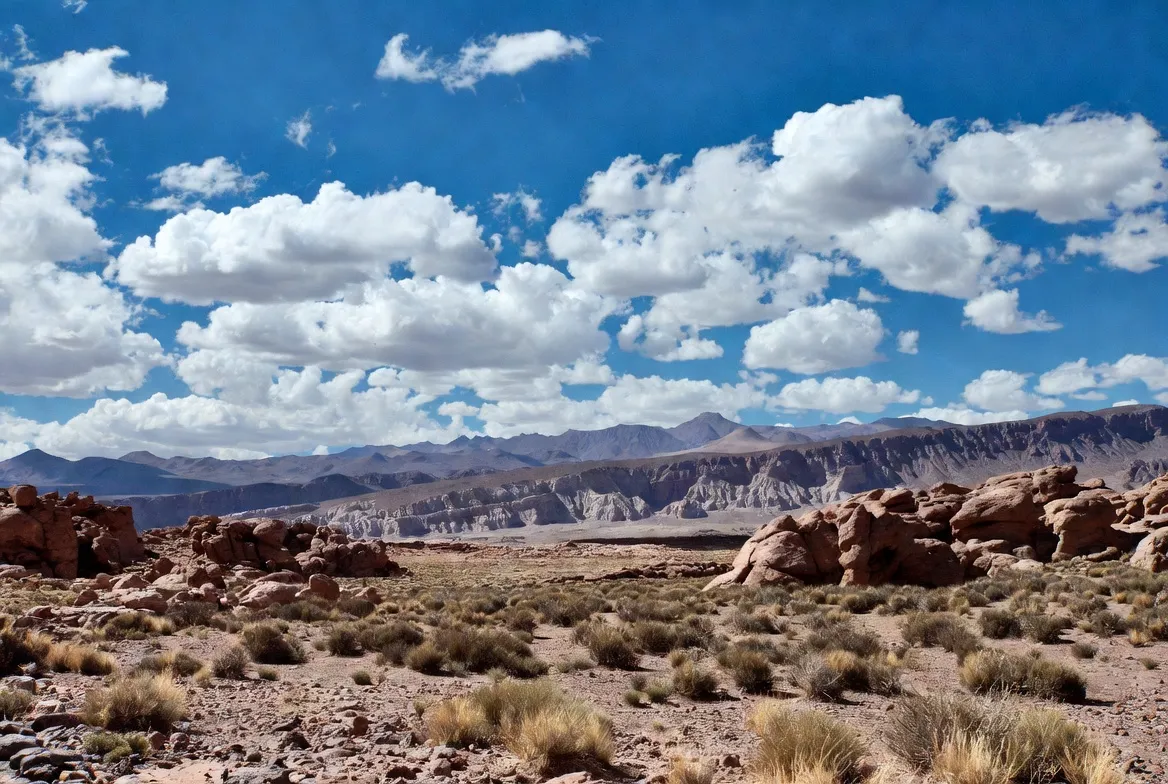
The Atacama is a varied environment comprising salares (salt flats), altiplano (high plains), volcanic cones, badlands, and strategic wetlands. Distances matter: what looks close on a map can be hours of high-altitude driving on gravel. Most tourist Attractions range from 30 minutes to several hours from San Pedro. Crucially, many sites sit above 3,000 meters (≈10,000 ft),, which affects oxygen levels, UV exposure, and temperature swings.
Key facts
- Driest non-polar desert: most areas receive negligible annual rainfall.
- High altitude: plan time for your body to adjust.
- Exceptional clarity: world-class for stargazing because of dry air and low light pollution.
- Fragile environment: crusts, wetlands, and lichens are easily damaged by foot traffic.
Top attractions explained
Valle de la Luna
What to expect: Sand and salt formations, wind-sculpted ridges, and dramatic color shifts at sunset. Walks are short to moderate; some trails have soft sand. Tip: Arrive early enough to choose a good vantage point and bring a headlamp for the walk back if your return is after dark.
El Tatio Geysers
What to expect: One of the highest-altitude geyser fields in the world. Pickup around 4:00–5:00 AM is common because sunrise produces the strongest steam columns. Temperatures at dawn can fall well below freezing. Many operators provide a light breakfast; some include a soak in nearby hot springs afterward. Tip: Dress in layers and cover extremities — it’s bitterly cold pre-dawn.
Altiplanic Lagoons & Piedras Rojas
What to expect: High-altitude lakes with intense turquoise hues, volcanic backdrops, and flamingo sightings. Freshwater is scarce; the terrain is rugged but typically accessible by 4×4. Tip: Allow time to acclimatize before spending long hours at these altitudes.
Salar de Atacama & Laguna Cejar
What to expect: A vast salt flat with interspersed lagoons. Laguna Cejar is noted for its salt content that makes floating unusually easy. Flamingos frequent certain lagoons; rules vary about entering water. Tip: Follow signage and guide instructions — some lagoons are protected.
Stargazing tours / Observatories
What to expect: Professional guides with telescopes and interpretive talk. Some tours include astrophotography tips and a chance to see planets, nebulae, and the Milky Way. Tip: Book near a new moon and check weather forecasts; nights can be cold,,, so bring warm clothing.
How to choose the right kind of tour
Ask yourself these practical questions
- How many days can I spare? If only one, focus on Moon Valley + stargazing. With two, add El Tatio or a lagoon. With 3–4 days, you can hit the classic loop.
- Do I mind very early starts? El Tatio requires a pre-dawn pickup.
- Do I prioritize comfort or budget? Luxury lodges and private guides cost more but handle logistics. Local operators may be cheaper with smaller groups.
- How important is group size? If photography or solitude is essential, choose small-group or private tours.
Short stays (1 day): Choose Valle de la Luna plus a night stargazing tour.
2 days: Add El Tatio sunrise and Laguna Cejar or Salar visits.
3–4 days: Classic loop: Valle de la Luna, Altiplanic lagoons, Salar de Atacama, El Tatio, plus rest time.
Sample itineraries — copy/paste plans.
These itineraries are flexible templates; swap days based on weather and personal energy.
1-day: Valle de la Luna + Stargazing
- Afternoon: Arrive and rest in San Pedro; hydrate and avoid heavy exertion.
- Late afternoon: Depart for Valle de la Luna; arrive in time to walk and choose a sunset viewpoint.
- Evening: Return to San Pedro; join a stargazing tour (usually 2–3 hrs).
2-day: Valle de la Luna + El Tatio + Laguna Cejar
Day 1: Relax and visit Valle de la Luna at sunset.
Day 2 (pre-dawn): Pickup for El Tatio around 4–5 AM; return midday; float at Laguna Cejar in the afternoon.
3-day: Classic highlights loop
1: Acclimatize; short town walk; Valle de la Luna.
2: Full-day Altiplanic lagoons & Piedras Rojas.
3: El Tatio sunrise; afternoon hot springs or relax in town.
4-day: Extended exploration
Combine the 3-day loop plus Salar de Atacama & Chaxa flamingo reserve or a cultural day (archaeology sites, local markets, and village visits).
Costs & booking tips
Cost ranges
- Half-day tours: USD $30–$80.
- Full-day tours: USD $60–$150 (some include lunch).
- Sunrise El Tatio: USD $50–$120.
- Multi-day packages / guided small groups/luxury: USD $300–$2,000+.
- Stargazing: USD $30–$120 depending on equipment.
Booking tips
- Compare marketplace platforms (e.g., GetYourGuide, Viator) with local operators; local operators often offer better prices or smaller groups.
- Confirm inclusions — entrance fees, transfers, meals, hot springs access, and pickup points.
- For El Tatio, book 48–72 hours ahead in high season.
- Read recent reviews (last 3 months) to catch route changes, closures, and operator reliability.
- Ask about group size and the language of the guide if that matters.
- Local cash: Bring small bills for tips, snacks, or remote fees — card machines can fail.
Safety & altitude — what to know
Altitude is the dominant safety issue in the Atacama. Many sites are between 3,000 m and 4,200 m (≈10,000–13,800 ft). Symptoms of acute mountain sickness (AMS) include headache, nausea, dizziness, fatigue, and shortness of breath.
Practical safety steps
- Acclimatize: Spend 24–48 hours in San Pedro if possible before high-altitude tours.
- Hydrate: Drink water regularly; bring electrolytes and sip throughout the day.
- Avoid strenuous exercise on the first day.
- Consider medication: Consult your physician about acetazolamide (Diamox) if you have a history of severe altitude sickness.
- Recognize warning signs: If symptoms worsen (severe breathlessness, confusion, inability to walk), descend immediately and seek medical help.
- Dress for extremes: Layers, windproof outer layers, hat, and gloves. Dawn at El Tatio often drops below freezing.
- Sun protection: UV exposure is intense — SPF 50+, sunglasses with UV protection, and a wide-brim hat.
- Driving safety: If you rent a 4×4, be experienced; gravel roads and sudden weather changes can be hazardous. Use local operators if unsure.
Packing checklist
Clothing
- Thermal base layer (top and bottom)
- Fleece mid-layer or insulated jacket
- Windproof/waterproof shell
- Hat and gloves for early mornings
- Wide-brim sun hat for daytime
- Sturdy walking shoes or light hiking boots
Sun & health
- SPF 50+ sunscreen (broad-spectrum)
- UV sunglasses (category 3 or better)
- Reusable water bottle (1–2 L recommended)
- Electrolyte tablets or powder
- Personal prescription medications
Gear
- Headlamp (for early starts and late returns)
- Portable power bank
- Extra camera batteries and memory cards
- Small daypack (to carry water and layers)
Extras
- Cash (small bills)
- Photocopy of passport (keep separate from originals)
- Travel insurance that covers high-altitude evacuation (if you have plans above 4,000 m)
Responsible tourism & local culture
- Support local guides and businesses — the economic benefit stays local when you choose family-run operations.
- Stay on marked paths — salt crusts, lichens and wetlands are fragile and recover slowly.
- Respect wildlife — do not feed flamingos or other birds; keep a distance and avoid sudden movements.
- Ask before photographing people — cultural courtesy matters in small communities.
- Carry out your trash and conserve water when possible. Tourism increases pressure on scarce resources; choose operators that publish sustainability statements or demonstrate low-impact practices.
Insider tips
- Ask about group size. Smaller groups mean quieter tours and better photo opportunities.
- Confirm pickup time & place the night before — some pickups occur extremely early.
- Bring cash for small vendors. Card machines sometimes lose signal in town or on remote sites.
- For stargazing, ask about telescope aperture and camera options — the bigger the telescope, the better the view; some tours will let you attach a camera.
- Shoulder seasons (Apr–May and Sep–Oct) offer fewer crowds and typically good skies without the peak-season price spikes.
- Check operator sustainability practices if that matters to you — small changes like biodegradable soaps, low water usage, and respect for cultural sites make a difference.
Pros & cons — Tours vs Self-guided
Pros of tours
- Logistics (transfers, permits, and entrance) handled.
- Local guides provide cultural and geological context and enhance safety.
- Equipment (telescopes, blankets, sometimes snacks) is sometimes provided.
Cons of tours
- Less flexibility and pre-defined schedules.
- Large marketplace tours can have big groups.
- Can be more expensive than DIY if you already own the right vehicle and gear.
When to self-guide
- If you have a dependable 4×4, high-altitude driving experience, and enough time to plan routes, permits, and seasonal access. For most travelers, guided options are safer and less stressful.
Environmental issues & conservation
- Fragile ecosystems: Salt flats and high-altitude wetlands are easily damaged by foot traffic and vehicles.
- Water scarcity: Tourism adds pressure to local water supplies used by communities and wildlife.
- Climate variability: Unpredictable rains or increased temperatures can alter habitats and access.
- How to help: Ask operators about low-impact practices, support lodges that use sustainable water and waste practices, and choose companies that invest back into the local community.
Interesting facts & semantic nuggets
- The Atacama hosts some of the world’s premier astronomical observatories because of low humidity, high altitude, and minimal light pollution.
- El Tatio is among the highest geyser fields on Earth.
- The rare desert bloom or “floración” occurs after unusual rains and carpets parts of the desert with flowers for a limited time.
Table — Sample day-by-day logistics for a 3-day classic loop
| Day | Morning | Afternoon | Evening |
| Day 1 | Arrive in San Pedro; rest | Short town visit, museum | Valle de la Luna at sunset |
| Day 2 | Full-day: AltiAltiplánicoons & Piedras Rojas | Lunch on tour | Free night (optional observatory) |
| Day 3 | Pre-dawn El Tatio sunrise | Return to San Pedro; hot springs or rest | Dinner & market shopping |
FAQs
A: Most standard tours are suitable for average travelers. However, high-altitude hikes or extended treks require better fitness and acclimatization. Ask your operator about difficulty ratings and allow time to rest on arrival. Avoid heavy exertion on your first day.
A: Many tours can accommodate families. El Tatio’s early start and high altitude may be hard on very young children. Always ask the operator for age limits and safety precautions, and consider private tours for extra flexibility.
A: Yes—many tours sell spots locally. But during peak season popular trips (El Tatio, multi-day packages, observatory nights) can sell out. Book at least 48–72 hours in advance for high-demand excursions.
A: Yes—flamingos are found in multiple lagoons, notably in reserves such as Chaxa and certain altiplanic lagoons. Bring binoculars for the best views and follow guides’ instructions to avoid disturbing them.
Conclusion
Whether you have one afternoon or four days, smart planning — acclimatizing in San Pedro, choosing the right tour size, and packing for extreme sun and cold — turns the Atacama from a stunning photo op into a safe, unforgettable trip. Pick responsible local operators, respect fragile ecosystems, and you’ll leave with spectacular landscapes and lasting memories (and maybe the best stargazing of your life).