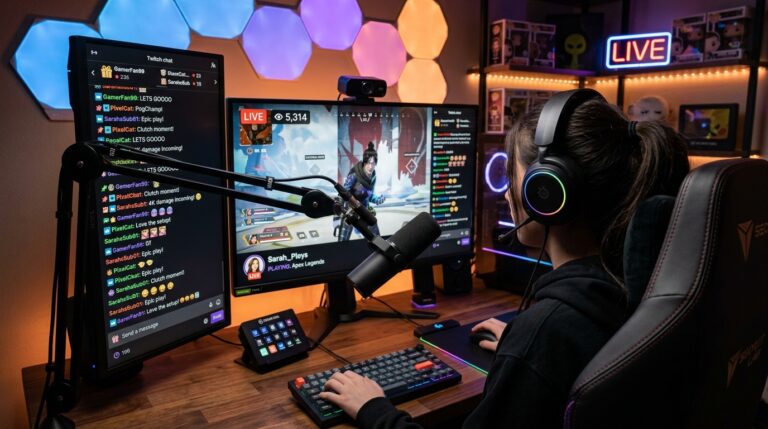


Online gaming has quietly become one of the most significant social platforms of our time, rivaling traditional social media in how people connect, communicate, and build relationships. What started as a way to compete or cooperate in virtual worlds has evolved into a genuine social ecosystem with its own norms, communities, and lasting friendships.
- From Solo Play to Shared Experience
- The Shift Toward Multiplayer-First Design
- Voice and Video Chat as Standard Features
- Building Communities Around Shared Interests
- Guilds, Clans, and In-Game Groups
- Streaming and Spectator Culture
- Cross-Platform Play Expanding Social Circles
- Forming Genuine, Lasting Relationships
- Friendships That Start Online, Stay Online
- Long-Distance Connection
- A Space for Social Practice
- The Challenges Worth Acknowledging
- Balancing Online and Offline Connection
- Navigating Toxic Behavior
- Final Thoughts
From Solo Play to Shared Experience
The Shift Toward Multiplayer-First Design
Many of today’s most popular games are built around multiplayer experiences from the ground up, rather than treating online play as an afterthought. This design shift reflects a broader change in what players actually want: connection and shared experience, not just individual achievement.
Voice and Video Chat as Standard Features
Integrated voice chat has transformed gaming sessions into genuine social hangouts. Friends now coordinate strategy, joke around, and catch up on each other’s lives while playing — turning gaming sessions into a modern equivalent of gathering in someone’s living room.
Building Communities Around Shared Interests
Guilds, Clans, and In-Game Groups
Persistent online games often organize players into guilds or clans, creating structured communities with their own hierarchies, traditions, and inside jokes. These groups frequently extend beyond the game itself, with members chatting on separate platforms between sessions.
Streaming and Spectator Culture
Watching others play has become a social activity in its own right. Live-streaming platforms let viewers interact in real time with both the streamer and each other, creating communities that form around shared enthusiasm for specific games or personalities.
Cross-Platform Play Expanding Social Circles
As more games support play across different consoles and devices, friend groups are less restricted by which platform everyone owns. This has made it easier to maintain gaming friendships even as people upgrade or switch hardware.
Forming Genuine, Lasting Relationships
Friendships That Start Online, Stay Online
Many players report meeting some of their closest friends through gaming, often people they’ve never met in person but talk to regularly. These relationships can be just as meaningful as those formed through traditional means, built on shared experiences and consistent interaction over time.
Long-Distance Connection
For friends and family separated by distance, online gaming offers a shared activity that closes the gap in a way phone calls alone often can’t. Playing together regularly can maintain closeness that might otherwise fade with time and distance.
A Space for Social Practice
For some players, particularly those who find in-person social situations challenging, online gaming offers a lower-pressure environment to practice communication and teamwork skills, which can build confidence that carries into other areas of life.
The Challenges Worth Acknowledging
Balancing Online and Offline Connection
While online gaming offers real social value, it works best as a complement to, rather than a replacement for, in-person relationships and activities. Maintaining that balance matters for overall wellbeing.
Navigating Toxic Behavior
Not every online interaction is positive, and toxic behavior remains a real issue in many gaming communities. Choosing games and communities with active moderation, and setting personal boundaries around who you interact with, makes a meaningful difference in the overall experience.
Final Thoughts
Online gaming has evolved into a genuine social platform, offering connection, community, and friendship in ways that go far beyond simple entertainment. As voice chat, streaming, and cross-platform play continue to lower barriers to interaction, gaming is likely to remain a significant space for how people — especially younger generations — build and maintain relationships.